

Free written scope consultation - allowances, timeline, and change-order rules on paper before a single trade is scheduled
Styles & brands we work with







See the difference
 Before
 After
After Before
 After
After Before
 After
AfterHow Much Does Tub-to-Shower Conversion Cost in Austin?
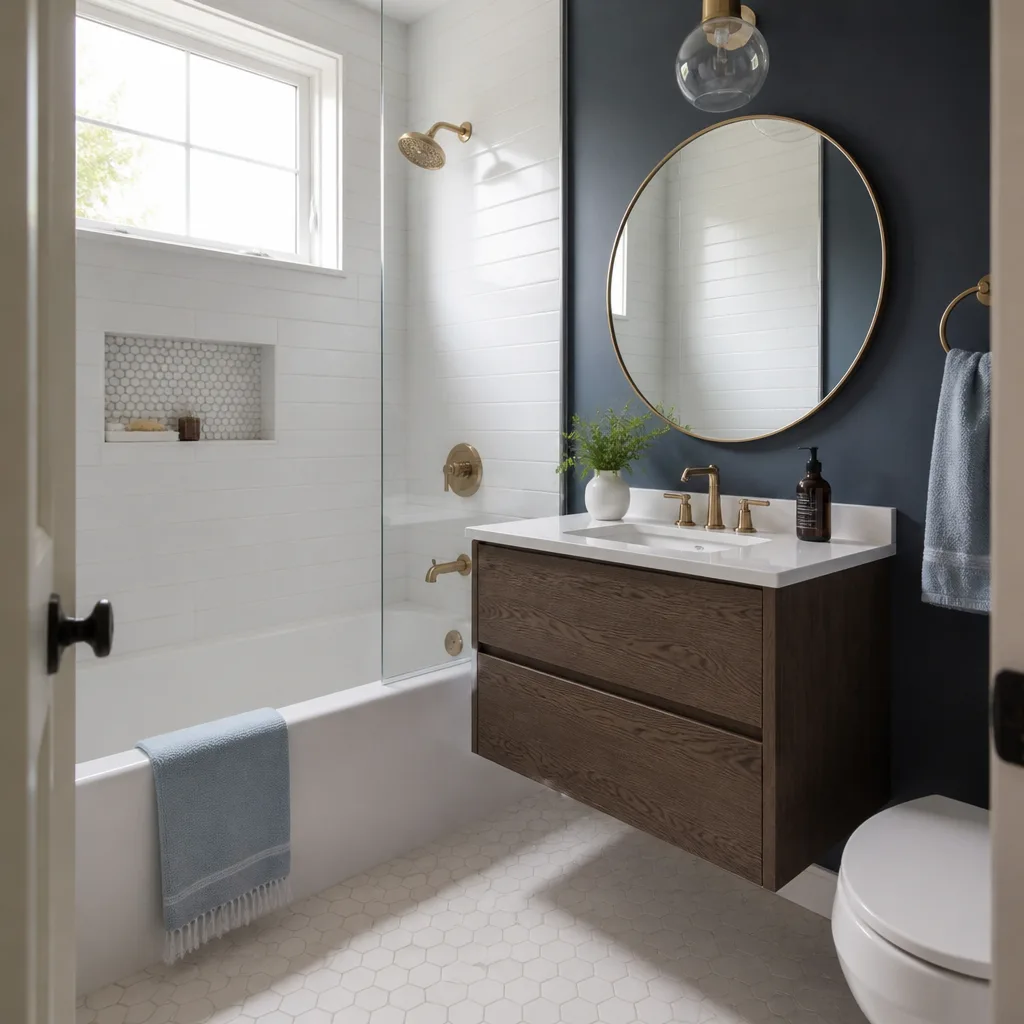
A tub-to-shower conversion in Austin typically costs between $3,500 and $10,000, with most homeowners in central neighborhoods like Hyde Park, Mueller, and Brentwood landing around $6,500 to $8,500 for a standard 60-inch alcove conversion with mid-range finishes. That price includes demolition of the old tub, plumbing adjustments, waterproofing, a new shower pan or tile floor, wall surround, glass door, and all fixtures. On the lower end, a simple acrylic surround with a fiberglass pan can run closer to $3,500; on the higher end, a fully tiled walk-in shower with custom glass, a bench, and upgraded plumbing can push past $10,000.
What you won’t get from this page is a vague “it depends.” We’re giving you the actual numbers Austin homeowners see in 2026, so you can plan a budget before you ever pick up the phone. And when you do call (409) 834-4854, you’ll get a written price before any work starts, not a ballpark that doubles on day three.
Key Takeaways:
- Full Austin range: $3,500 to $10,000, with $6,500 to $8,500 as the sweet spot for most homes.
- Acrylic and fiberglass kits land at the bottom; fully tiled custom showers land at the top.
- Permits for plumbing changes run about $150 to $400 depending on the City of Austin scope.
- Most conversions take 3 to 7 days from demo to final caulk.
- Sawyer Remodel Austin writes the price down before the first tool is picked up.
Tub-to-Shower Conversion Cost Breakdown (2026)
Here’s where the dollars actually go on a typical Austin tub-to-shower conversion. These numbers are calibrated for the current 2026 Austin market, where labor rates run higher than the Texas state average thanks to steady demand across Travis and Williamson Counties.
| Line Item | Low End | High End | What You’re Paying For |
|---|---|---|---|
| Demolition & haul-away | $400 | $900 | Removing the old tub, tile, drywall down to the studs, and disposal fees. |
| Plumbing rough-in adjustments | $300 | $1,200 | Moving or replacing the drain, valve, and supply lines to fit a shower footprint. |
| Waterproofing system | $600 | $1,800 | Schluter Kerdi membrane or equivalent, cement board, and sealing at all seams. |
| Shower pan or tile floor | $400 | $2,000 | Preformed acrylic or fiberglass pan on the low end; custom mud-set tile with a linear drain on the high end. |
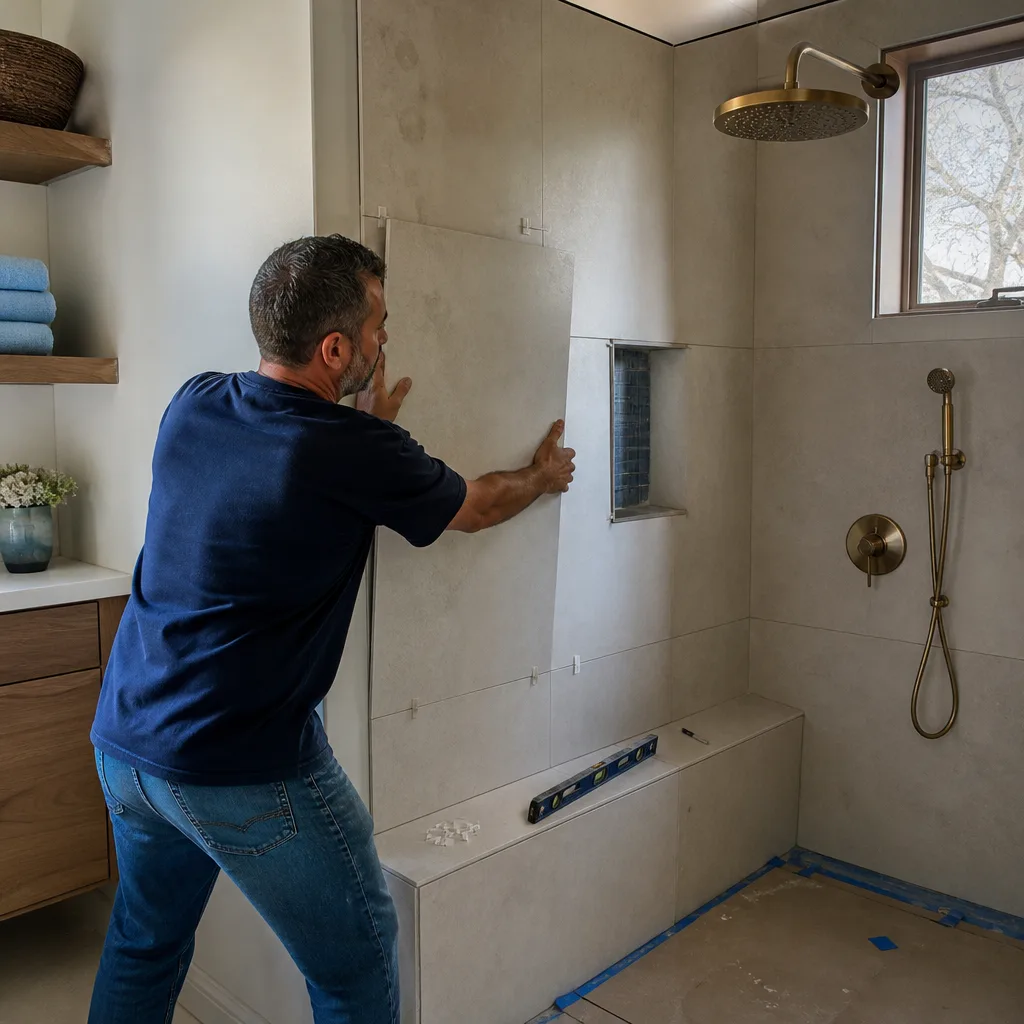
| Wall surround (acrylic, fiberglass, or tile) | $700 | $3,000 | Glue-up acrylic panels are cheapest; large-format porcelain tile with a custom layout is the most. |
| Shower door (sliding, pivot, or frameless) | $300 | $1,500 | A basic sliding door is affordable; frameless tempered glass with custom hardware runs more. |
| Fixtures (valve, head, trim kit) | $200 | $900 | Builder-grade vs. name-brand fixtures from Kohler or Toto. |
| Finishing touches (grab bars, corner shelf, bench, niches) | $100 | $700 | Recessed niches for shampoo, teak or tile benches, and any accessibility add-ons. |
| City of Austin permit | $150 | $400 | Required when the plumbing drain or valve moves. Homeowners applying directly saves a little. |
What we’ve seen in dozens of Austin homes over the nearly two decades Sawyer Remodeling has been in business: the widest swings come from the shower base and the wall material. An acrylic kit walls-and-all reads about $3,500 to $5,500 all-in. Move to tile and a custom pan, and you’re at $7,500 to $10,000 before you add a frameless door. If you want to see exactly where your home would land, call (409) 834-4854 and we’ll walk the space and hand you a written number.
What Affects Tub-to-Shower Conversion Pricing in Austin
- Whether the tub sits on a slab or pier-and-beam. East Austin bungalows from the 1930s and 1940s often sit on pier-and-beam, which makes plumbing access easier and cheaper. Slab foundations, common in newer Circle C and Steiner Ranch homes, can require breaking concrete to move the drain, adding $400 to $800.
- Waterproofing method. A full Schluter Kerdi system (the orange membrane you may have seen on remodel shows) runs higher than cement-board-with-redguard, but it carries a manufacturer warranty and stands up to Austin’s humidity swings better. If you’re in a humid microclimate near Lake Travis or along Barton Creek, this is where you don’t cut corners.
- Tile size and layout. Large-format 12×24 porcelain tiles look modern but eat more labor in cutting and setting; 4×4 ceramic is cheaper to buy and faster to install. A herringbone or subway-pattern shower wall adds anywhere from $300 to $800 in labor over a straight-set grid.
- Door type. The difference between a $300 sliding shower door and a $1,500 frameless glass panel is the biggest single visual upgrade most homeowners notice, and it swings the final cost proportionally.
- Plumbing’s age. Mid-century homes in Allandale and Rosedale often have galvanized steel supply lines that can be rusted through. Swapping or re-fitting those lines before the shower goes in adds to the bottom line, and it’s usually the right call.
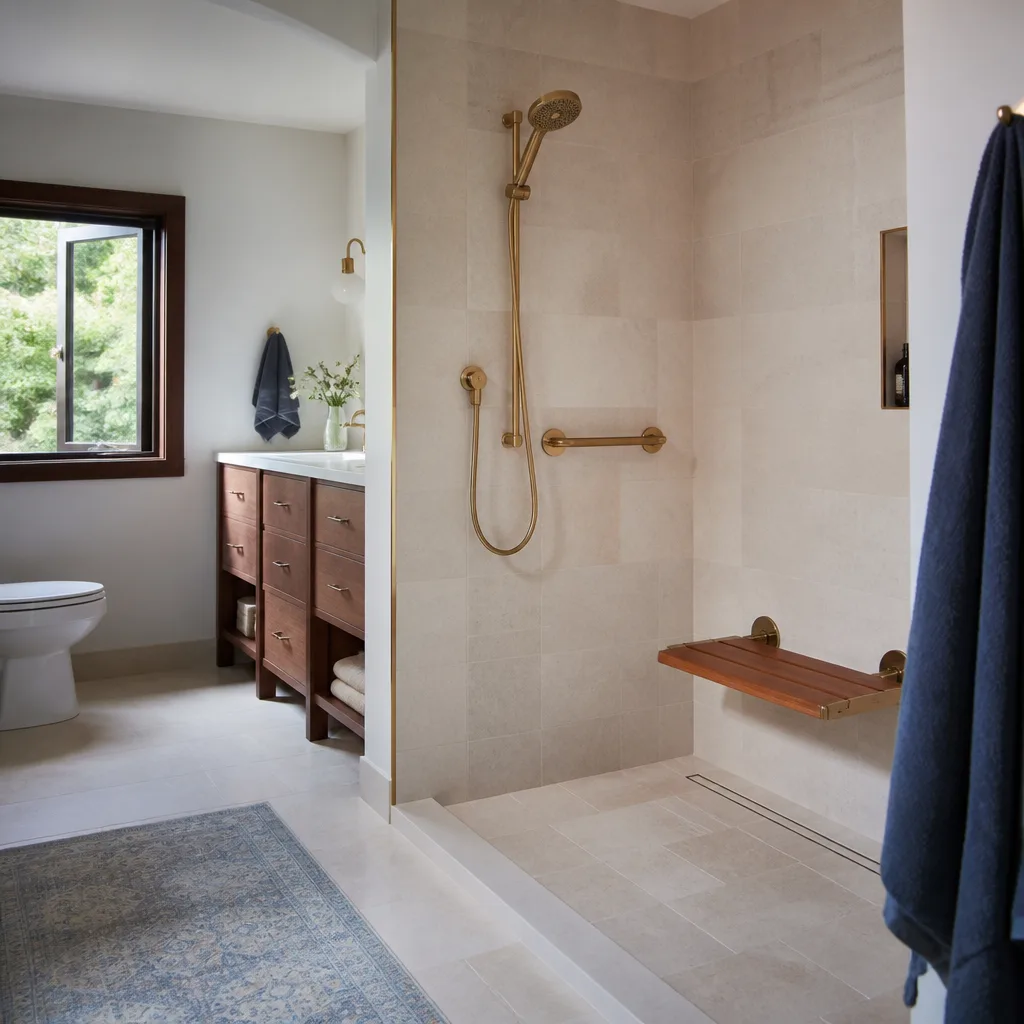
- Accessibility upgrades. Adding a zero-entry or low-threshold pan, a fold-down teak bench, and grab bars for an aging-in-place remodel pushes materials up. In the Highland Park West area and near Seton Medical Center, we see this request often.
How to Save on Tub-to-Shower Conversion
You don’t need to call anyone to understand the levers. Here they are, plainly:
- Stick with a 60-inch alcove footprint. The tub already spans five feet. Keep the shower in the exact same spot, and you avoid moving a drain or valve, which is where the permit and the concrete work come in.
- Choose a preformed pan and acrylic surround. Acrylic and fiberglass systems are $2,000 to $4,000 less than tile, and a well-installed system still looks crisp. We install them straight, seal them correctly, and they hold up for decades when done right.
- Buy the fixtures yourself, if that’s your thing. We can supply Kohler, Moen, and Grohe fixtures through our trade partnerships, but if you find a trim kit you love on sale, we’ll install it. You’ll get a written price either way.
- Schedule for the slower season. Austin remodel demand dips in late summer when people are on vacation and in early January. If you can book then, you may find more flexibility; if you can’t, we still honor the price we write down.
- Skip the custom glass; take the standard door. Frameless looks great, but a clean semi-frameless slider is half the cost and works in any size opening.
The fastest way to save is to know the number before you commit. Sawyer Remodel Austin gives free estimates. Call (409) 834-4854, tell us what you’re working with, and we’ll give you a written price. Not a range. Not a guess. A number you can budget against.
Why Austin Homeowners Convert Tubs to Showers
The reasons are consistent across the city, whether you’re in a 1980s tract house in Wells Branch or a 2005 build in Mueller. First, the tub in most secondary bathrooms goes years without ever holding a bath. Converting unlocks floor-to-ceiling space, which makes a small hall bath feel double the size. Second, aging-in-place is real: stepping over a 14-to-16 inch tub wall is a genuine fall risk for older adults, and a low-threshold shower solves that. Third, resale preference in Austin’s 2026 market leans hard toward homes with at least one updated walk-in shower; buyers in their 30s and 40s don’t want to inherit someone else’s 20-year-old tub.
We mention this because it shapes the budget conversation. A tub-to-shower conversion isn’t a repair line item; it’s a value-add improvement, and spending the extra thousand on a tiled surround or a frameless glass panel tends to come back at listing time.
How the Permitting Works in Austin
If the shower drain stays in the same place and you’re only swapping fixtures, the City of Austin may classify the job as a simple fixture replacement and no permit is required. But the moment a valve or drain line moves (and they usually do, since tub valves sit lower than shower valves), you’re looking at a plumbing permit through the City of Austin’s Development Services Department. The permit itself runs roughly $150 to $400 depending on valuation, and the inspection takes about 15 minutes. We handle the paperwork, schedule the inspection, and stand there while the inspector checks the work. You won’t have to chase anything down.
One Austin-specific wrinkle: homes in designated historic districts like Hyde Park or the Bremond Block may have additional review requirements if the conversion touches the exterior envelope. Interior work rarely triggers it, but if your tub sits against an exterior wall with old wood windows in the shower splash zone, it’s worth a conversation before demo day. Call (409) 834-4854 and we’ll tell you straight what your specific address triggers.
Tub-to-Shower vs. Other Austin Bathroom Projects
If you’re weighing a tub-to-shower conversion against a full tub-to-shower conversion project or a larger bathroom remodel, here’s the math. A tub-to-shower conversion at $3,500 to $10,000 is the cheapest way to change the function of the room. A full bathroom remodel starts around $9,000 and goes up from there because you’re touching the vanity, flooring, toilet, lighting, and often the layout. A walk-in shower installation from bare studs runs $4,500 to $12,000, depending on whether you’re building from scratch or converting. And a shower replacement (new pan, new walls, new door, same footprint) is $3,000 to $8,500.
Here’s the insight from our side of the toolbelt: if the tub surround is failing or you’ve had a leak, a conversion usually makes more sense than a repair. The demolition is already half-done. The plumbing is already open. And you’ll end up with something you actually use. For a deeper look at the service itself and how we run these jobs from start to finish, see our Tub-to-Shower Conversion in Austin guide. It’s part of the broader work we do back on our home page.
What to Expect During the Conversion
Here’s the straight sequence, because no one shows you the middle part until you’re standing in it:
- Day 1: Pre-build walkthrough. We measure the opening, check the slab or crawl space, confirm water pressure, and hand you the written price. No work starts until you approve that number.
- Day 2: Demo. The tub, the tile, the drywall, and the old valve get pulled. We seal the bathroom off with zip walls to keep the dust out of the rest of the house.
- Day 3: Rough-in. The drain gets moved, the new mixing valve goes in, and the walls get blocked for grab-bar backing. The City of Austin inspector checks the work if a permit was pulled.
- Days 4-5: Waterproofing and finish surfaces. Membrane, pan, tile or acrylic, grout, and caulk. This is the part that looks like slow progress but matters the most.
- Day 6: Glass and fixtures. The shower door goes in last, after the grout has had a day to cure. The trim kit, shower head, and valve handle get installed and tested.
- Day 7: Walkthrough and closeout. We run the water, check the drain, and take before-and-after photos. You get the invoice by link, and the 365-Day Done Right Promise starts that day.
That promise is in writing on every job. If something isn’t right in the first year, we make it right. No arguing, no “well, that’s standard,” no chasing.
Real Numbers from the Austin Market
Real numbers from Austin jobs, not national averages:
- A 1980s hall bath near Anderson Mill: standard 60-inch alcove conversion, acrylic surround, fiberglass pan, sliding glass door, Moen valve. $4,950 total.
- A 1960s ranch in Crestview: pier-and-beam access, 12×24 porcelain tile to the ceiling, custom mud pan with a linear drain, frameless glass, a corner bench, and a recessed niche. $10,000 on the nose.
- A 2010s two-story in Shady Hollow: slab foundation, the drain moved two feet, Schluter waterproofing, large-format tile, Kohler trim. $8,200 total.
- A 1940s bungalow near Hyde Park: the old pine subfloor had rot from a failing tub flange, so we replaced two floor joists and the subfloor before waterproofing. The shower itself was mid-grade; the subfloor repair added $1,700, bringing the job to $9,200.
The pattern is straight: the house tells you what it needs, and the number you get should match the work, not the other way around. That’s why we write the price down and don’t move it unless we find something hidden during demo, and if that happens, we stop and call you with a new written number before touching another screw.
FAQs – Tub-to-Shower Conversion Cost
Can you convert a tub to a walk-in shower for under $5,000 in Austin?
Yes, a standard 60-inch alcove conversion with a fiberglass or acrylic pan, an acrylic wall surround, and a sliding glass door can be done for $3,500 to $5,000 in Austin if the plumbing stays mostly in place and you’re not moving the drain. Labor runs about half the job, so the savings come from choosing stock materials over custom tile. Call (409) 834-4854 and we’ll tell you straight whether your bathroom will hit that number or what’s holding it above.
Does a tub-to-shower conversion add value to a home in Austin?
Most appraisers and Austin real estate agents we work with estimate a well-done tub-to-shower conversion recovers 70 to 80 percent of its cost at resale, and it’s one of the first upgrades buyers notice in a hall bath. The key is making sure the home still has at least one bathtub somewhere; buyers with young kids filter for that. If you’ve got a tub in the primary bath, converting the hall bath tub is a safe play.
How long does a tub-to-shower conversion take?
Our standard timeline is 3 to 7 days from demo to final inspection. Acrylic systems go faster because the walls are preformed panels; tiled showers need a day for grout to cure before the glass goes in. The City of Austin inspection, if required, happens mid-job and we schedule it. If you’re trying to time it around guests or a coming move, tell us the date and we’ll work backwards from it.
Do I need a permit to convert a tub to a shower in Austin?
If the valve or drain moves, yes, the City of Austin requires a plumbing permit, which runs $150 to $400. If the drain and water supply lines stay in their current spots, the job may qualify as a fixture swap and skip the permit line. We handle the paperwork for every permitted job and the inspection is included in the price we quote. Never pay a contractor to do unpermitted plumbing; when you go to sell, it’s the sort of thing that surfaces.
Is it cheaper to repair my old tub or convert it to a shower?
A tub reglaze or a surround refresh runs $500 to $1,500 and buys you a few more years. A full tub-to-shower conversion runs $3,500 to $10,000. If the tub itself is cracked or the flange behind it is leaking, you’ll spend half the cost of a conversion chasing repairs and still have a dated tub at the end. In that spot, the conversion is the better spend. Call (409) 834-4854 for a free estimate and we’ll help you decide which route fits your budget in Austin’s 2026 market.
Get a Written Price Before You Decide
Here’s the bottom of it: a tub-to-shower conversion in Austin will run you somewhere between $3,500 and $10,000 in 2026. Where your home lands depends on the foundation, the waterproofing, the tile, the glass, and the plumbing’s age. You shouldn’t have to guess where the middle is, and you don’t have to with us.
Sawyer Remodel Austin has been running projects under The Relay Standard since 2005, and every tub-to-shower conversion includes a written price before any work starts, a 365-Day Done Right Promise in writing, background-checked uniformed technicians, and photo updates before and after. The number you approve is the number you pay. The person who answers the phone is a live person, not a callback queue. Call (409) 834-4854 and get a price that won’t change at the door.
Pricing reflects the Austin market as of 2026. Sawyer Remodel Austin offers free estimates – call (409) 834-4854.
Written by Luca Romano, Owner at Sawyer Remodel Austin, serving the Austin area since 2005.
What Our Customers Say
"Floors and paint finished on time. Floors were sanded, stained, and the walls painted without any gaps in the schedule."
- Ron T."Straight talk and simple communication. Every question got an answer by text within the hour."
- Cherie A."Crew cleaned up each day. Swept and wiped down the work area every evening, which I did not expect."
- Joy B.