




Free written scope consultation - allowances, timeline, and change-order rules on paper before a single trade is scheduled
CertainTeed Kitchen Remodeling: The Austin Owner’s Guide
CertainTeed kitchen remodeling in Austin typically runs $14,000 to $45,000 installed, depending on cabinet layout, countertop material, and how much plumbing or electrical has to move. We stock CertainTeed-compatible trim, edge profiles, and panel systems on our trucks and can match most failed components same-week. Most Austin owners find out something failed the hard way: a cabinet face pulls loose at the hinge, a countertop seam separates, or a corner trim piece cracks after a humidity swing and the panel behind it starts swelling.
CertainTeed doesn’t make cabinetry the way KraftMaid does. CertainTeed’s kitchen line leans into surfaces, trim, edge banding, and waterproof substrate panels that sit underneath tile, stone, and laminate. When that substrate fails, the finish on top fails with it. We’re an independent Austin contractor, not a CertainTeed dealer, which matters because it means we fix the whole assembly rather than just sell you a replacement strip. The installation is where these parts live or die in Central Texas, and that’s the thing we actually control.
Which CertainTeed Models This Applies To
CertainTeed’s kitchen products break into three groups that show up in Austin homes. First is the Durock cement board line, used as backer under tile backsplashes and behind sink walls. This is the most common failure point we see in Bouldin Creek, Travis Heights, and older Hyde Park kitchens where the original install predates current waterproofing standards. Second is CertainTeed’s PVC trim and panel profiles, which get used as toe kicks, crown trim, and finished end panels on cabinet runs. Third is their edge and corner trim systems, which cap exposed board ends and seam transitions.
The compatibility gotcha most Austin owners hit: CertainTeed’s Durock cement board comes in 1/4-inch and 1/2-inch thicknesses, and you cannot reliably tile over the 1/4-inch version on a wall. It’s rated for floors and countertops, not vertical backer. We’ve walked into kitchens where someone used 1/4-inch on a backsplash wall and the whole tile field is cracked behind the range. Before any repair, we check the board thickness, the fastener pattern, and the joint tape. If the original installer skipped the alkali-resistant mesh tape at the seams, the failure is structural, not cosmetic.
For OEM versus aftermarket on CertainTeed trim profiles: once the original profile line is discontinued, matching the exact profile matters more than the brand printed on the back. We keep a stock of current profile samples on the truck and match to what’s already in the house. If the exact profile is gone, we’ll tell you before we order anything. No surprises.
Styles & brands we work with







Signs Your CertainTeed Kitchen Remodeling Is Failing
- Wavy or cracked tile over the backsplash. This usually means the cement board behind it was too thin or the seams were never taped. The tile isn’t the problem; the substrate is flexing, and the tile is just reporting it.
- Soft spots around the sink plumbing cutouts. Water gets behind the board through an unsealed fixture gap, and the CertainTeed panel swells. By the time you see the soft spot, the panel behind the finish is already done.
- Trim pulling away at the toe kick or crown. Wood framing moves with humidity, and PVC trim doesn’t move the same way. If the installer nailed instead of using adhesive plus mechanical fasteners at the right spacing, the joint opens up within a couple of Austin’s wet-dry cycles.
- Dark staining along a countertop seam. That’s water wicking into an unsealed seam, and in Austin’s climate it’s a mold invitation. The seam needs to come out, the edge needs to dry, and the joint needs redoing before you recaulk.
- A musty smell you can’t locate inside the cabinet run. Nine times out of ten in Austin kitchens, it’s a concealed water leak that’s been soaking the backer board behind the sink cabinet. The smell is the first sign. The second sign is the cabinet bottom falling through.
See the difference
 Before
 After
After Before
 After
After Before
 After
AfterReplacement Cost & What’s Included
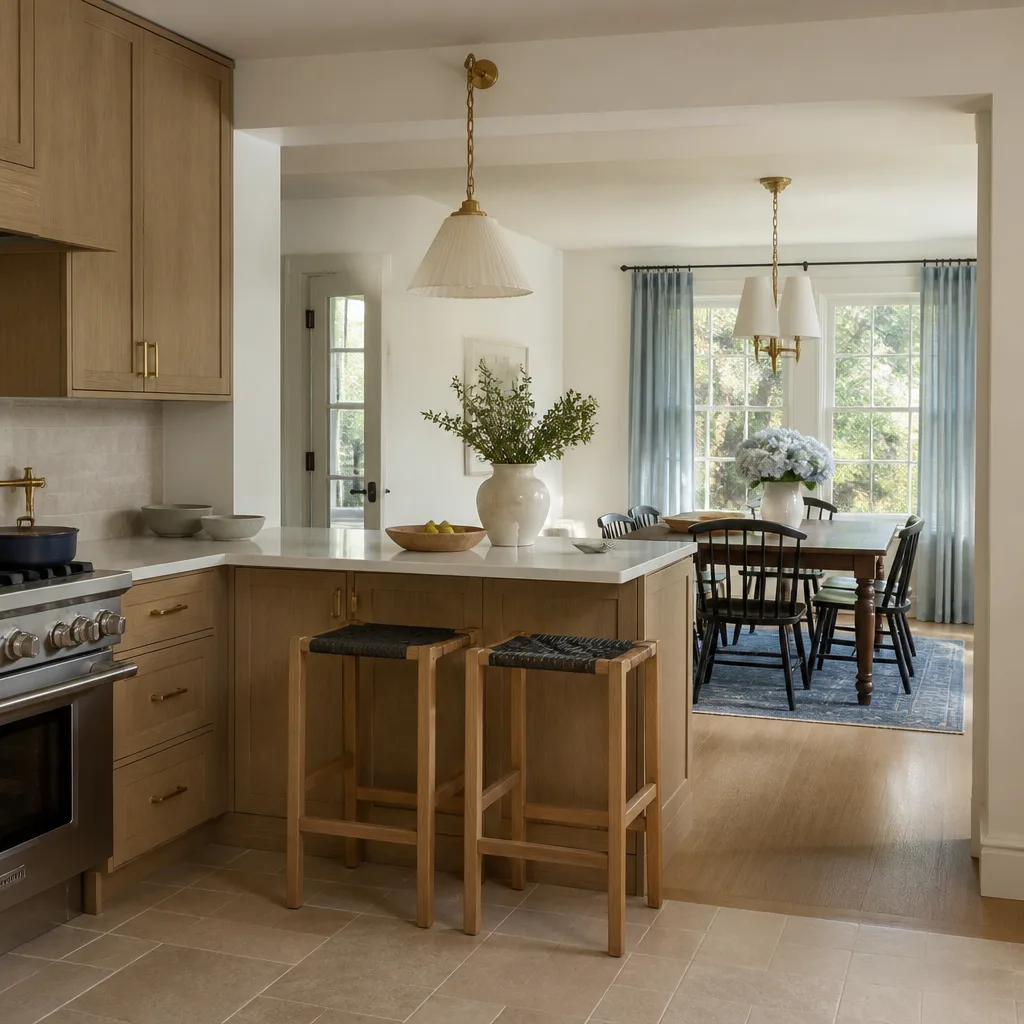
Full CertainTeed kitchen remodeling in Austin runs $14,000 to $45,000. That range covers everything from a mid-size kitchen refresh with new counters, backsplash, and refaced cabinetry at the low end, to a full gut with custom cabinetry, new substrate throughout, plumbing moves, and stone tops at the high end. Smaller scopes break down like this:
- Cabinet installation: $4,000 – $13,000
- Countertop installation: $2,000 – $6,500
- Backsplash installation: $800 – $2,500
- Kitchen island installation: $3,000 – $10,000
- Small kitchen remodel: $9,000 – $20,000
Every quote we write includes labor, materials, and disposal. The Written Price Before Any Work Starts means the number you approve is the number you pay. If the substrate is worse than expected once demo starts, we call you with photos and a revised written price before we proceed. You’re never surprised at the invoice. Luca Romano built the company on that rule, and it’s the reason most of our Austin work comes from referrals.
DIY or Call Us?
Some of this you can check yourself. Look under the sink with a flashlight for staining on the backer board. Run your hand along tile lines to find waviness. Check whether trim joints have opened up. That’s all safe, and it tells you whether you have a real problem or just an old kitchen.
What you shouldn’t DIY: pulling off failed trim to see what’s behind it, cutting into cement board, or trying to patch a substrate panel without pulling the finish layer. Once you open a seam, you’ve committed to the full repair, and the wrong saw or the wrong blade depth turns a $1,500 trim fix into a $6,000 substrate replacement. Water damage behind cabinets is not a weekend job. It’s also not something you want to live with once it’s found. Call (409) 834-4854 and we’ll schedule a real estimate, walk you through what’s actually failing, and put the fix in writing.
FAQs
Properly installed Durock backer board and PVC trim should last the life of the kitchen, which around here means 20 to 30 years before a remodel. The weak points are water entry and installer shortcuts, not the material itself. If something failed within five years, it was almost always the install, not the CertainTeed product. Call (409) 834-4854 and we’ll tell you which one you’re dealing with before we touch a tool.
Small trim separations and wet seams can usually be repaired in place. Soft or swollen substrate cannot be repaired; the panel comes out and a new one goes in, which means the finish layer above it comes off first. We’ll tell you the honest answer at the estimate, not after demo starts. Call (409) 834-4854 to get it looked at.
A trim replacement or seam repair is typically one day on site. A substrate replacement behind a sink wall is two to three days, including dry time. A full kitchen remodel runs four to eight weeks depending on scope and material lead times. We give you a schedule in writing before work starts, and The Relay Visibility Guarantee means photo updates before and after, with a live arrival time, on every visit.
We stock common CertainTeed-compatible profiles, Durock board in both thicknesses, and the specific tape and adhesives these installs require. For discontinued profiles or custom color-matched trim, we source through our supplier network and bring you the option with an exact price before we order. We also work with KraftMaid, Cambria, and Silestone for the cabinet and surface side of the job, so you’re not juggling vendors. Call (409) 834-4854 for a free estimate and we’ll figure out exactly what’s needed.
Written by Luca Romano, Owner, Sawyer Remodel Austin at Sawyer Remodel Austin, serving Austin and nearby areas.


