


Free written scope consultation - allowances, timeline, and change-order rules on paper before a single trade is scheduled
Plant Prefab Kitchen Remodeling: The Austin Owner’s Guide
Plant Prefab kitchen remodeling in Austin typically runs $14,000 – $45,000 depending on cabinet run length, countertop material, and whether you’re replacing the full shell or working within the existing panel system. Most owners reach out to us when a section of their prefab kitchen has failed: a delaminating cabinet face, a countertop seam that’s opened up, or hardware that’s pulling out of the panel substrate. We stock Plant Prefab-compatible cabinet hardware, panel fasteners, and edge banding on our trucks, and we can usually start within a week of the estimate.
What catches most Plant Prefab owners off guard in Austin is how the climate works against the original install. Our humidity swings, from 90% summer mornings to bone-dry winter afternoons, cause the laminated panels to expand and contract. That movement shows up first at seams and hinge mounts. Luca Romano’s crew has opened up enough of these kitchens across Bouldin Creek, Rosedale, and Mueller to know exactly where a Plant Prefab kitchen fails first, and what actually holds up in a Texas kitchen.
Which Plant Prefab Models This Applies To
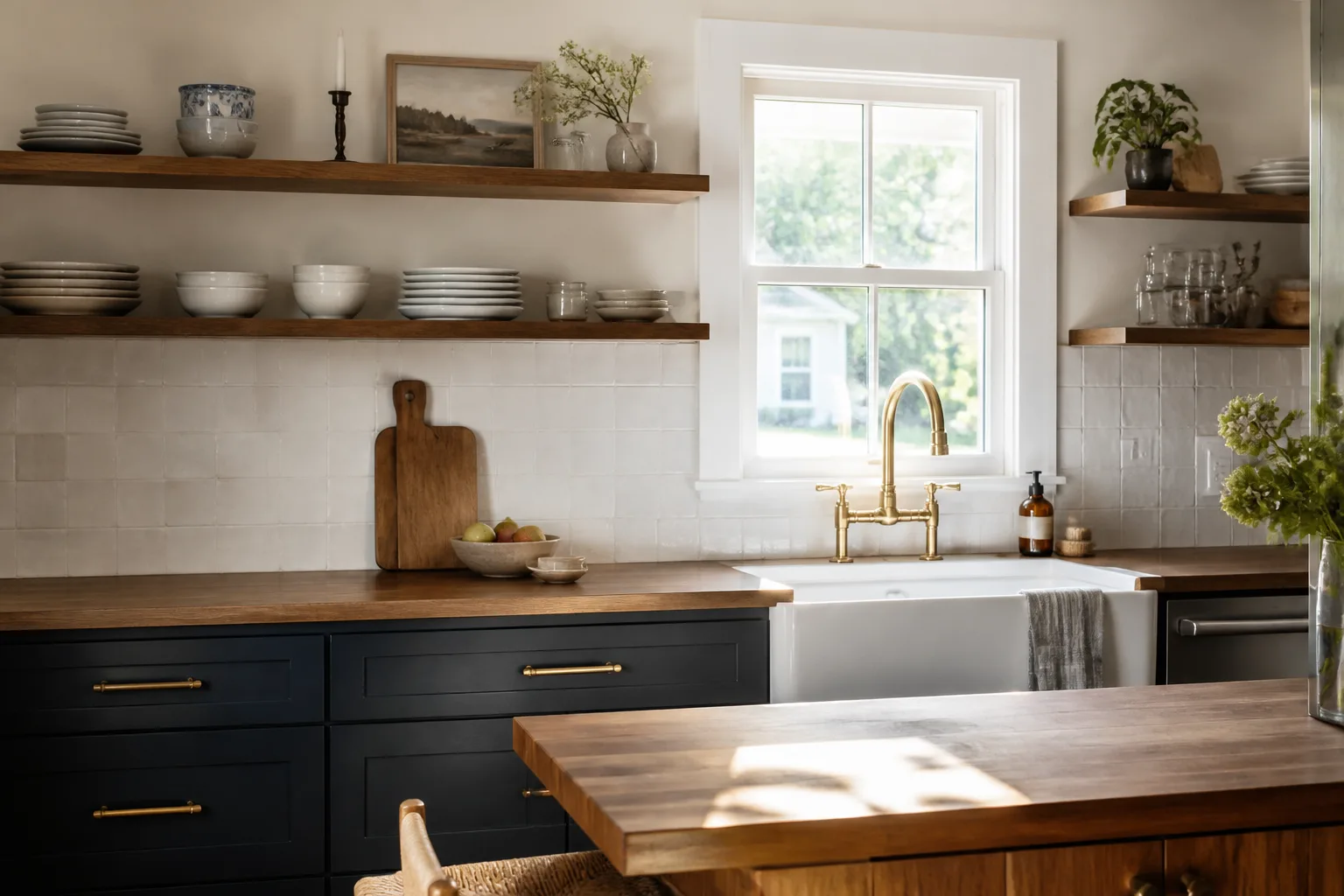
We work on kitchens across the Plant Prefab product line, from the LivingHome series (the YB1, YB2, C1, and C10 models) through custom panels on the R9 and multi-module builds. The compatibility gotcha most owners don’t know: Plant Prefab changed their panel edge profile around 2019, moving from a square-edge laminate to a micro-beveled edge on cabinet faces. If you order aftermarket cabinet doors for a pre-2019 build, you’ll see a visible step at the seam where the old door meets the new panel edge. We match the profile before ordering anything.
The fastest way to identify your panel spec is the serial label inside the sink base cabinet door. It lists the panel lot, the finish code, and the production date. Bring us a photo of that label and the failed part, and we’ll match it. For most Plant Prefab kitchens, we recommend OEM or OEM-spec panels for the visible faces, since the color matching on aftermarket laminates drifts noticeably across brands. For internal hardware, soft-close hinges and drawer slides, quality aftermarket parts like Blum or Grass are identical to what Plant Prefab used and often run half the price.
A note on sourcing: Sawyer Remodel Austin is an independent remodeling contractor. We’re not affiliated with Plant Prefab, but we’ve worked on enough of their kitchens to know the panel systems, the fastener patterns, and what can be repaired in place versus what has to be replaced as a unit.
Styles & brands we work with







Signs Your Plant Prefab Kitchen Remodeling Is Failing
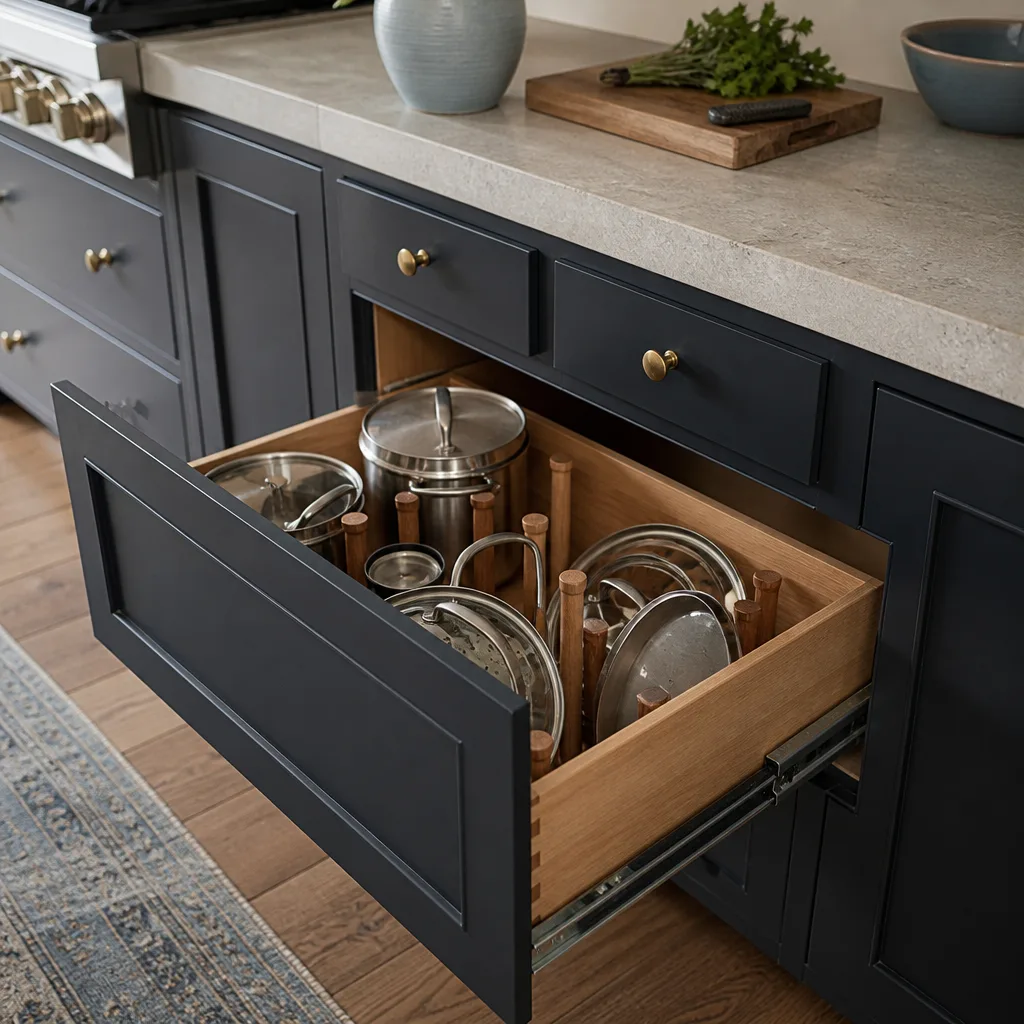
- Delaminating cabinet faces. The laminate is peeling away from the substrate at the edges, usually near the sink or dishwasher where steam hits regularly. The underlying MDF is swelling, and once it’s swollen, glue won’t rebond it. That panel needs replacement, not a re-glue.
- Hinges pulling out of the panel. This is the classic Plant Prefab failure we see in Austin kitchens, especially on tall pantry doors. The original hinge screws strip out of the particleboard core. The panel itself is fine, but the screw holes have wallowed out. We drill and fill with high-density plugs, then remount with larger-diameter screws.
- Countertop seams opening. Austin’s humidity swings cause laminate and solid-surface counters to expand and contract. The seam at the corner of the L-run is usually where it shows first. If you can feel the seam with a fingernail, water is getting in and the substrate is softening.
- Drawer slides binding or popping. When drawer boxes sit slightly out of square from panel shrinkage, the slides bind. You’ll hear a pop when opening, or the drawer will feel gritty. It’s almost always a panel alignment issue, not a failed slide.
- Cabinet boxes sagging at the wall cleat. The wall cabinets hang on a French cleat system, and if the original install didn’t hit studs on both sides, the box starts to pull away from the wall at the top. You’ll see a gap at the crown, and the doors won’t line up across the run.
See the difference
 Before
 After
After Before
 After
After Before
 After
AfterReplacement Cost & What’s Included
Our Plant Prefab kitchen remodeling work in Austin falls into three tiers. A targeted repair, like replacing a few failed cabinet faces or remounting hinges, runs $1,500 – $4,500. A partial kitchen refresh, new cabinet doors and hardware plus countertops on the existing boxes, lands in the $14,000 – $25,000 range. A full kitchen remodel with new cabinetry, countertops, backsplash, and island sits at $30,000 – $45,000.
| Scope | Typical Austin Range |
|---|---|
| Targeted panel repair (1 – 3 cabinets) | $1,500 – $4,500 |
| Cabinet door/face replacement + hardware | $4,000 – $13,000 |
| Countertop replacement (full run) | $2,000 – $6,500 |
| Full Plant Prefab kitchen remodel | $30,000 – $45,000 |
Every quote is written before work starts, and the number on the invoice is the number you approved. Parts and labor are itemized separately. Our 365-Day Done Right Promise covers the workmanship on every Plant Prefab kitchen job: if something we installed fails within a year, we come back and fix it, no argument and no invoice.
DIY or Call Us?
What you can safely handle yourself: tightening hardware, adjusting soft-close hinges, and cleaning the panel surfaces with a non-abrasive cleaner. Those are maintenance tasks. What goes wrong fast for Plant Prefab owners is attempting a panel replacement without matching the edge profile and finish code, because the mismatch looks worse than the original damage. Removing wall cabinets is another one. Those French cleat mounts are under load, and if a cabinet drops while it’s coming off the wall, you’re looking at a cracked countertop or a broken tile floor. Panel work also involves cutting laminate, which chips if you run the blade the wrong direction or at the wrong speed. If the failed part is a cabinet face, drawer box, or anything load-bearing, call us at (409) 834-4854. The estimate is free, and we’ll tell you honestly whether it’s a $300 repair or a $3,000 replacement before you spend a dollar.
FAQs

In Austin’s humidity cycle, expect 15 – 20 years from the original cabinet faces and boxes before panel delamination or hardware pull-out becomes a real issue. Kitchens with poor ventilation above the range or a dishwasher that vents into the cabinet run go faster, sometimes showing edge swelling at 8 – 10 years. Call (409) 834-4854 and we’ll assess whether you’re looking at repair or replacement.
No, not reliably. Once the laminate has separated from the MDF core and moisture has gotten in, the substrate is compromised. Re-gluing the laminate leaves a bubble underneath and the bond fails again within months. Replacement is the honest fix. For an exact quote on the panels you need, call (409) 834-4854.
A targeted repair takes one day. A partial refresh with new cabinet faces and hardware runs two to three days. A full kitchen remodel with countertops, backsplash, and island runs three to five weeks depending on material lead times from Cambria, Silestone, or KraftMaid. We’ll give you a written schedule before any work starts.
We keep standard Plant Prefab-compatible hardware on the truck: soft-close hinges, drawer slides, panel fasteners, and edge banding. Finish-matched panels and cabinet faces are ordered to spec, typically one to two weeks out. We’ll confirm lead time on your specific finish code during the estimate.
Written by Luca Romano, Owner, Sawyer Remodel Austin at Sawyer Remodel Austin, serving Austin and nearby areas.


