

Last updated October 16, 2026



Free written scope consultation - allowances, timeline, and change-order rules on paper before a single trade is scheduled
Construction Cost Breakdown: The Austin Homeowner’s Reference for 2026
The most misleading number in Austin remodeling is the cost-per-square-foot figure. It averages a $40,000 cosmetic kitchen refresh with a $400,000 foundation-up addition, then presents the result as if it means something for your specific project on your specific lot with current material lead times. What you actually need is a line-item understanding of where money goes in 2026, why two neighbors can pay wildly different amounts for the same scope of work, and how to spot a contractor estimate designed to shift cost risk onto you. This guide gives you real Austin numbers by project type, the labor and material forces behind them, and the contractual language that keeps your price fixed once demo begins. For more guides & resources on navigating Austin’s construction market, explore our blog.
Quick Answer
Construction costs in Austin in 2026 run roughly $185 to $420 per square foot for interior remodeling work, with kitchens landing between $45,000 and $115,000, bathrooms between $18,000 and $48,000, room additions between $210,000 and $390,000, and ADUs between $195,000 and $360,000. Labor now represents 45 to 60 percent of most project budgets because Austin’s subcontractor pool remains stretched thin by ADU construction and infill development. The single most effective way to control your financial exposure is a written price guarantee that locks the scope before demolition, rather than a verbal estimate that leaves room for change orders later.
Styles & brands we work with







Table of Contents
- Kitchen Remodel Costs in Austin: Line Items That Actually Matter
- Bathroom Remodel Costs: What a Mid-Range Austin Bath Actually Costs
- Room Addition Costs: Why Square Footage Is Only Half the Story
- ADU Costs: Austin’s Busiest Construction Segment in 2026
- Full Interior Renovation: The Gut-and-Rebuild Budget
- Austin Labor Rates: What Subs Actually Charge in 2026
- How to Read an Estimate for Cost-Shifting Risk
- The Written Price Guarantee: Your Contractual Shield
- Common Mistakes to Avoid
- When to Call a Professional
- Frequently Asked Questions
Kitchen Remodel Costs in Austin: Line Items That Actually Matter
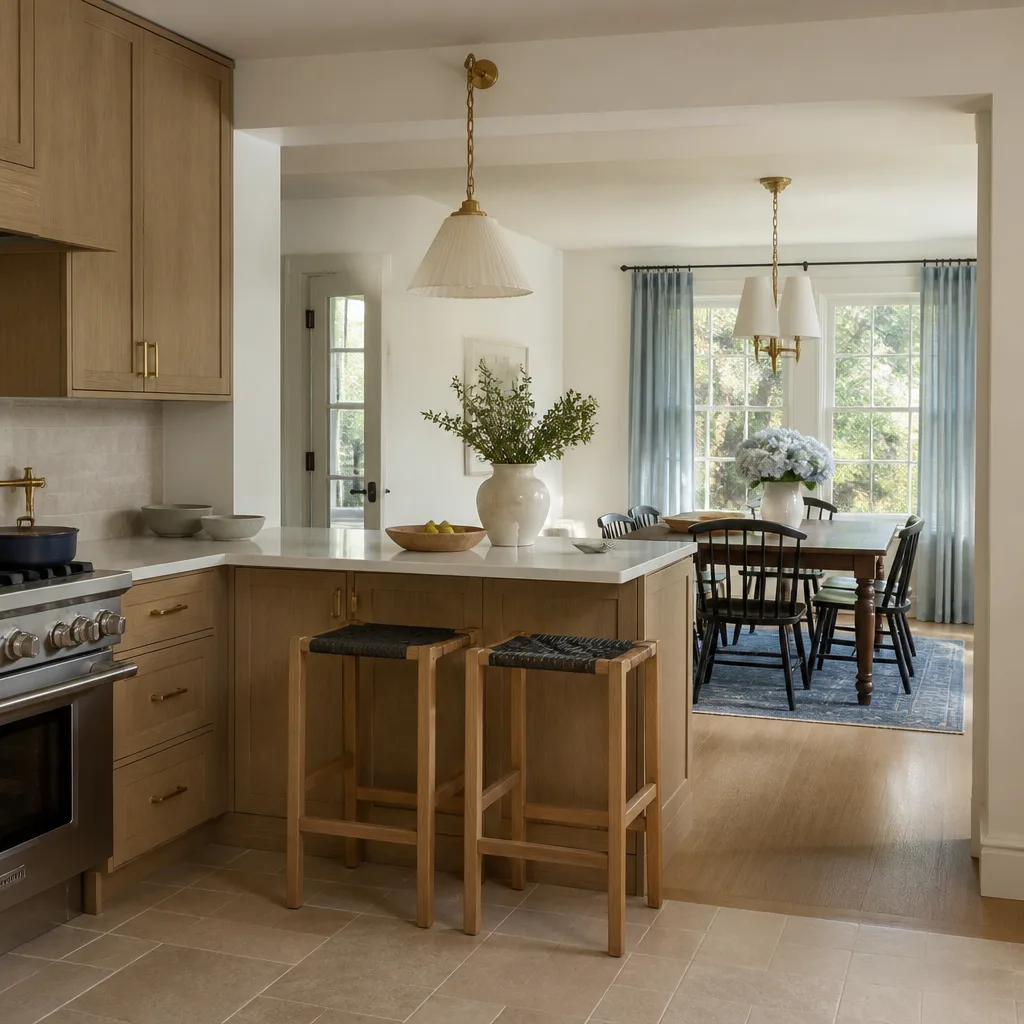
A mid-range kitchen remodel in Austin in 2026 runs between $55,000 and $85,000. That figure assumes you’re keeping the existing footprint, replacing cabinets and counters, updating appliances, and refinishing or replacing flooring. A high-end kitchen touches $115,000 or more when you start moving plumbing, knocking down a wall, or spec’ing slab counters from Cambria or Caesarstone instead of standard quartz from a big-box supplier. Here’s where the money goes on a typical Austin kitchen:
- Cabinetry: $14,000 to $28,000. This is the single largest line item. Semi-custom lines like Wellborn run higher than stock boxes, but they hold tolerances better over time. Austin’s humidity swings mean cheap particleboard boxes fail faster than plywood construction.
- Countertops: $4,500 to $11,000. Material cost varies wildly. Laminate runs under $2,000 installed. Quartz from Silestone or Caesarstone lands mid-range. Natural stone with dramatic veining pushes toward $12,000 for a full kitchen.
- Plumbing and electrical: $4,000 to $9,000. If you’re not moving the sink or adding dedicated circuits, this stays modest. Move the sink across the room and you’re cutting into slab foundation work in many Austin homes.
- Flooring: $3,000 to $7,000. Tile holds up better than LVP in Austin’s heat, but LVP installs faster and cheaper.
- Appliances: $6,000 to $18,000. The range here is enormous. A package from a scratch-and-dent outlet runs a third of what a matching luxury suite costs.
- Demolition and disposal: $2,500 to $5,000. Austin’s landfill fees climbed again this year, and so did hauling.
- General conditions and project management: 10 to 15 percent of total. This covers dumpsters, porta-potties if needed, permits, scheduling, and the contractor’s overhead.
The low-end $45,000 kitchen in Austin is usually a cabinet-and-counter swap with paint and new fixtures, no wall changes, no appliance relocation. The high-end $115,000 kitchen usually involves structural work, custom cabinetry, and premium surfaces. Neither number is wrong. They’re different projects with the same name.
Our experience at Sawyer Remodel Austin home is that most homeowners benefit from choosing their material tier before we send a written price. It eliminates the awkward back-and-forth where a bid lands higher than expected because we specced a Cambria slab when the budget assumed builder-grade quartz.
Bathroom Remodel Costs: What a Mid-Range Austin Bath Actually Costs
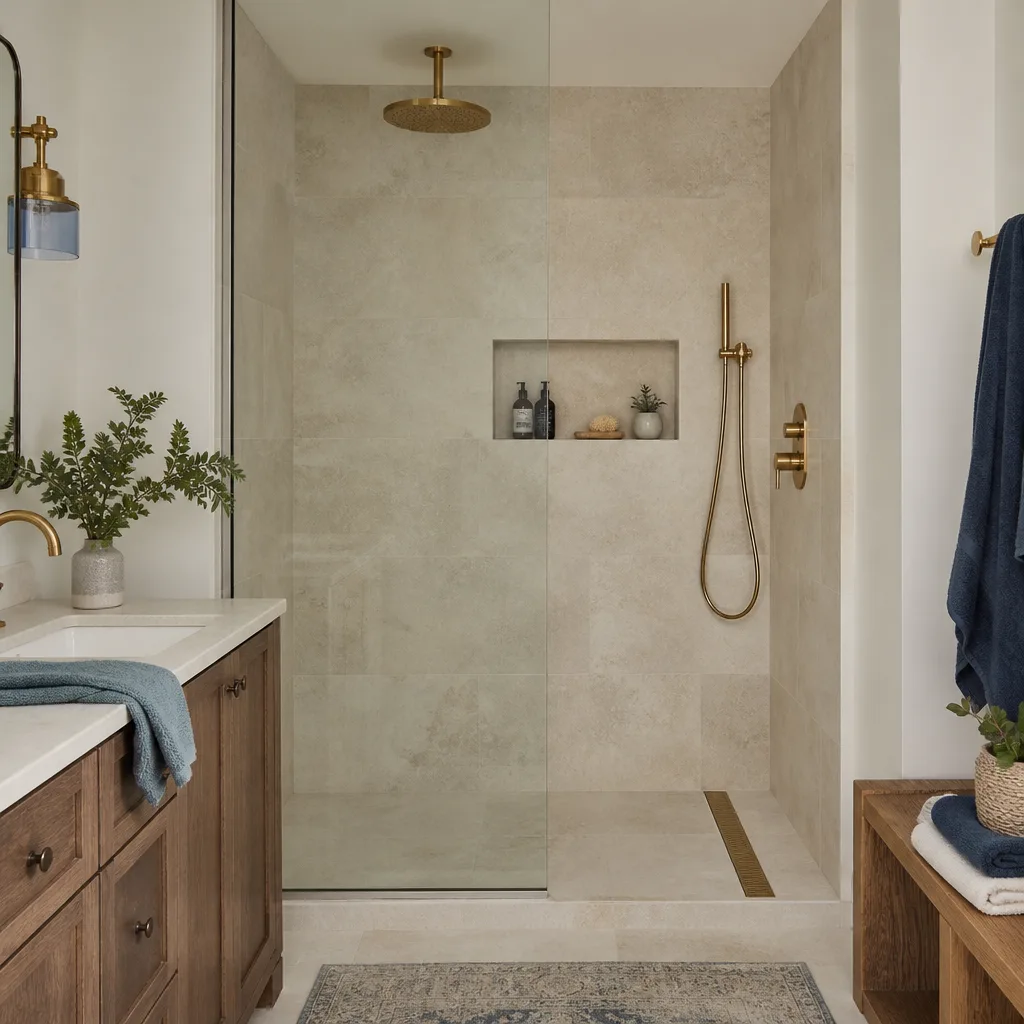
A full bathroom remodel in Austin runs between $18,000 and $48,000 in 2026, with the average landing around $28,000 for a 5×8-foot hall bath. At the low end, you’re replacing fixtures and tile while keeping the toilet and tub in their existing locations. At the high end, you’re relocating plumbing, adding a walk-in shower with a curbless entry, and installing a freestanding tub.
The line items that move a bathroom budget most:
- Waterproofing: $1,800 to $3,500. This is the part you’ll never see, and it’s the part that matters most in Austin’s humidity and clay soil. Schluter edge trim (the metal strip that waterproofs where your tile meets the floor) isn’t a luxury. It’s a failure point if skipped.
- Tile work: $3,000 to $9,000. Austin tile installers charge $12 to $25 per square foot, up from $9 to $16 five years ago. Larger-format tile installs faster, but material cost jumps.
- Plumbing fixtures: $1,200 to $6,000. A Kohler shower system with multiple heads costs five times a basic Moen single-head setup. Both work. One changes the daily experience.
- Vanity and counter: $2,500 to $6,500. A custom vanity with a stone top runs at the high end. A pre-fab vanity with a cultured marble top lands at the bottom.
- Glass shower enclosure: $1,400 to $3,200. Frameless glass is standard now. It’s a fixed line item once you choose the size.
- Ventilation: $400 to $1,100. Austin code requires exhaust fans in all full baths. Upgrading to a quieter Panasonic or Broan unit with humidity sensing is a small cost for a big difference in the 8 months a year where Austin air is heavy.
Labor runs 50 to 60 percent of a bathroom remodel because the work is sequence-dependent. The plumber shows before the electrician. The electrician shows before the drywaller. The drywaller finishes before the tile setter starts. Any delay in that chain cascades, and in Austin’s 2026 market, getting three subs to align on one project is a scheduling puzzle that costs real money.
If you’re considering a bathroom remodel and want to understand where your specific space lands, see Bathroom Remodeling in Austin for project examples and current pricing tiers.
Room Addition Costs: Why Square Footage Is Only Half the Story
Adding a room in Austin costs between $210,000 and $390,000 in 2026 for a typical 400 to 600 square-foot addition. That’s $350 to $650 per square foot, which is higher than new construction pricing. The reason is simple: an addition costs more per foot than new build because you’re tying into an existing structure, matching existing rooflines, and often working around a family living in the house while construction happens.
Three Austin-specific factors drive variance on additions:
- Foundation type. Slab-on-grade additions require cutting into the existing slab, drilling for rebar dowels, and pouring new concrete. Pier-and-beam additions are faster and cheaper because you’re just extending the pier grid. Homes built before 1970 in central Austin neighborhoods like Hyde Park or Bouldin Creek are more likely pier-and-beam. Homes in newer subdivisions like Mueller or Circle C are almost universally slab.
- Lot access. A zero-lot-line addition in East Austin or Allandale means hand-carrying materials through a side gate or over a fence. Mini excavators can’t fit. Concrete trucks need a pump truck instead of a direct pour. Access limitations can add $15,000 to $40,000 to a project that would be straightforward on a wider lot.
- Permit complexity by zip code. Austin’s Residential Plan Review division has different requirements depending on whether your home is in the historic district, falls under the McMansion Ordinance (which limits floor-area ratio and impervious cover on many central lots), or sits in a floodplain overlay. A simple addition in 78745 might sail through in 3 weeks. The same addition in 78704 with creek frontage could take 4 months of engineering review.
We always recommend owners budget for a geotechnical report ($3,000 to $5,000) on room additions in Austin. The clay soils here expand and contract more dramatically than most homeowners realize, and the difference between a good foundation and a cracked one is often a soil test performed before the first shovel hits dirt.
ADU Costs: Austin’s Busiest Construction Segment in 2026
Accessory dwelling units (ADUs) are the busiest segment of Austin’s construction market in 2026. A detached one-bedroom ADU with a kitchenette and full bath runs $195,000 to $280,000. A two-bedroom unit with full kitchen and laundry runs $260,000 to $360,000. Garage conversions land lower, between $90,000 and $160,000, because the shell already exists.
Here’s the cost reality Austin homeowners need to hear: ADU construction in 2026 is expensive because it competes with every other project for the same labor pool. The subcontractors framing ADUs in Crestview are the same subs framing room additions in Tarrytown and kitchen additions in Cherrywood. When demand spiked after Austin relaxed ADU regulations in recent years, rates followed.
What an ADU budget actually includes:
- Site work and foundation: $18,000 to $35,000. Tree removal, grade adjustment, trenching for utilities, and the slab or pier foundation.
- Framing and shell: $45,000 to $75,000. Lumber pricing has stabilized since 2021’s spike, but it never returned to pre-2020 levels. A 600-square-foot ADU shell costs more than the same shell did in 2019, even adjusted for inflation.
- Rough plumbing and electrical: $22,000 to $38,000. This includes the new service line from the street or the subpanel off the main house, plus sewer tie-in.
- Interior finishes: $45,000 to $80,000. Same material choices as a kitchen and bath remodel, just smaller square footage.
- Permits, plans, and engineering: $12,000 to $22,000. Austin’s ADU permitting path is more streamlined than it used to be, but you still need architectural drawings, structural engineering, and energy code compliance documentation.
If you’re thinking about an ADU, understand that the contractor’s management load is nearly the same as a full home addition. The project has all the same phases, permits, and inspections. You’re not paying less for management because the building is smaller. You’re paying for a complete construction process, just with fewer square feet.
Full Interior Renovation: The Gut-and-Rebuild Budget
A whole-home interior renovation in Austin, meaning you’re taking rooms down to studs and rebuilding, runs $185 to $320 per square foot in 2026. For a 2,000-square-foot home, that’s $370,000 to $640,000. This assumes the home is structurally sound with a foundation in good condition. If you’re adding foundation repair, the number climbs by $15,000 to $45,000 depending on severity.
Here’s the sequence of a full interior renovation and the cost range at each phase:
- Demolition: $8,000 to $18,000. Dumpster rental, labor, and disposal. Austin’s waste diversion requirements mean your contractor sorts and recycles where possible, which adds labor but reduces landfill fees.
- Framing and structural modifications: $25,000 to $60,000. If you’re moving walls, adding beams, or opening up a kitchen to a living space, this is where it lands.
- Plumbing, electrical, and HVAC: $45,000 to $85,000. A full renovation usually means new rough-in plumbing in walls that are open, new wiring throughout, and often a new HVAC system sized for the updated envelope.
- Insulation and drywall: $15,000 to $28,000. Austin’s energy code now requires higher R-values than builders installed even 15 years ago. Upgrading to closed-cell spray foam in attic assemblies costs more upfront but cuts summer cooling bills measurably.
- Flooring throughout: $18,000 to $40,000. Hardwood, tile, or LVP. Each has a different cost profile and a different durability profile in Austin’s climate.
- Kitchen and bath packages: $70,000 to $150,000. Same line items described above, just occurring as part of one larger project.
- Paint, trim, and fixtures: $12,000 to $25,000. The final 10 percent of the work that takes 20 percent of the schedule.
For a deep dive on how this process works from start to finish, see Home Renovation in Austin.
Austin Labor Rates: What Subs Actually Charge in 2026
Austin’s subcontractor rates climbed 20 to 35 percent between 2020 and 2026, and they show no sign of retreating. The skilled labor shortage that started during the pandemic never corrected because experienced tradespeople aged out of the workforce faster than new ones entered it. Meanwhile, Austin kept adding ADUs, infill houses, and remodel projects to the pipeline. More demand, same supply, higher rates.
Here are the day rates we see across our projects in Austin in 2026:
- Framing carpenters: $550 to $750 per day. A framing crew of three runs $1,650 to $2,250 daily. Framing package on a room addition takes 2 to 3 weeks.
- Licensed electricians: $900 to $1,400 per day. Journeyman electricians in Austin are scarce. Master electricians pull permits and supervise; most of the actual work is done by journeymen at $85 to $110 per hour.
- Licensed plumbers: $950 to $1,500 per day. The plumbing trade lost more people to retirement than almost any other trade. Austin’s growth rate means every plumber who can pass the licensing exam is booked weeks out.
- Tile setters: $450 to $700 per day. Tile work is physical, and the labor pool skews toward independent operators who set their own rates. Quality varies enormously, which is why we don’t rotate through cheap tile crews.
- Drywall and paint: $350 to $500 per day per worker. These trades are steadier and less volatile than the MEP trades, but they’ve climbed too.
The labor percentage of your project budget runs 45 to 60 percent depending on scope. Cabinetry-heavy projects lean toward materials. Tile-heavy projects lean toward labor. The practical takeaway is that you should not expect labor savings on a remodel by timing the market. Austin’s labor market in 2026 doesn’t have slow seasons the way it did a decade ago. Crews are booked year-round, and they charge accordingly.
How to Read an Estimate for Cost-Shifting Risk
Not all contractor estimates are engineered the same way. Some are written to win the job with a low number, then recover profit through change orders once the project is underway and your kitchen is demoed. Here’s how to spot the difference between a fixed-scope estimate and a cost-shifting estimate:
- Look for allowances versus fixed prices. An allowance is a budget placeholder, and it’s the most common place costs balloon. An estimate that lists “cabinetry allowance: $12,000” without specifying cabinet construction, finish level, or hardware is a number that will change. An estimate that lists “Wellborn maple cabinets, shaker doors, soft-close hinges, 14 linear feet upper, 16 linear feet lower” is a number that’s fixed.
- Check the demolition line item. Demolition is the phase where surprises live. An estimate that says “demo: included” without describing what happens when the crew finds water damage or aluminum wiring is an estimate that will generate a change order. A good estimate describes what happens if concealed conditions are discovered: at what point the contractor stops, documents the issue, and provides a written price adjustment before proceeding.
- Read the electrical scope carefully. Austin homes built before 1980 often have undersized panels. If your estimate doesn’t address whether your existing panel can handle new circuits, that’s a potential $4,000 to $7,000 surprise. The estimate should state either “existing 200-amp panel adequate” or “new subpanel included.”
- Understand which line items are fixed once scoped. Once a tile pattern is chosen, flooring material selected, and cabinet order placed, those costs are locked. The line items that move are the ones tied to unknown conditions: foundation work, concealed damage, and permit-required corrections to existing substandard work.
- Ask about the change order process upfront. A written change order process, with clear pricing approval before work continues, protects you. A verbal “we’ll figure it out” protects nobody.
The Written Price Guarantee: Your Contractual Shield
A verbal estimate is a conversation. A written price is a commitment. In Austin construction, the difference between the two is often tens of thousands of dollars.
Under The Relay Standard at General Contractor in Austin, our written price lands in your hands before a single tool is picked up. That price includes the full scope: material selections, labor, permits, and project management. If something changes mid-project, you approve a written change order before the work continues. The number on your final invoice is the number you approved. Not a number plus surprise additions.
Here’s how to contractually lock a price before demo begins:
- Get a written scope of work. This document lists every deliverable: what gets demolished, what gets built, what materials go where, what fixtures get installed. Vague scope is where cost-shifting hides.
- Require itemized allowance reconciliation. Every allowance should have a defined reconciliation process with receipts or supplier quotes attached. You should see exactly where allowance money went.
- Confirm the contract includes a no-cost-change clause for scope you already approved. If you picked a specific tile, a specific vanity, and a specific faucet, those are fixed. The only change reason should be concealed conditions or a change you initiate.
- Ask about the warranty before you sign. Our 365-Day Done Right Promise means if it’s not done right, we make it right. That’s in writing on every project, and it covers a full year after closeout. If a repair fails, we return for a second visit at no cost. Those are the terms. Not a verbal assurance.
- Verify who is showing up at your door. Background-checked, uniformed technicians are assigned to every project. You should know names and faces before anyone steps onto your property.
Common Mistakes to Avoid
- Budgeting from a national cost-per-square-foot average. National averages don’t account for Austin’s labor market, clay-soil foundation requirements, or the permit complexity in certain zip codes. If you budget $150 per square foot for a bathroom remodel, you’re underfunding by half.
- Skipping the geotechnical report on additions. Austin’s expansive clay soil is notorious. A $4,000 soil test is cheap compared to a $40,000 foundation repair five years after the addition settles wrong.
- Assuming your electrical panel can handle new circuits. Many Austin homes built before 2000 have 100-amp panels. Adding a kitchen remodel or ADU often triggers a panel upgrade that should have been in the original estimate.
- Choosing materials after signing the contract. The fastest way to see your budget climb is to pick materials after the estimate is written. Every material upgrade (from builder-grade to Cambria, from stock cabinets to Wellborn semi-custom) changes the price. Choose first, then lock the number.
- Ignoring the permit timeline. Austin permits don’t come back overnight. Historic district review, floodplain review, and resubmittal cycles can add weeks to a project. Planning for the permit timeline in your schedule prevents forced decisions later.
- Hiring the lowest bid without reading the exclusions. The cheapest estimate is usually the one with the most exclusions. Read what’s not included as carefully as what is. Exclusions are where cost-shifting lives.
- Not confirming who manages your project. Some contractors sell the job, then hand it to a rotating cast of subs with nobody accountable. Ask who your point of contact is and how often they’ll be on site. If the answer is vague, the project management is likely vague too.
When to Call a Professional
Some projects are DIY-able. Painting a bedroom, swapping a faucet, installing a shelf. You don’t need a contractor for those. You need a contractor when the work involves structural changes, plumbing or electrical modifications, waterproofing, or any project where the cost of getting it wrong exceeds the cost of hiring someone who does it right. That’s the honest line, and it’s the core tension explored in our guide to DIY vs Professional Construction: The Austin Homeowner’s Decision Guide.
If you’re planning a kitchen remodel, bathroom remodel, room addition, ADU, or full interior renovation in Austin, get a written price from a contractor who explains exactly what’s in the number. Sawyer Remodel Austin offers free estimates in Austin. Call (409) 834-4854 and we’ll walk your project, answer questions, and send a written price you can hold us to.
Frequently Asked Questions
A mid-range kitchen remodel in Austin runs $55,000 to $85,000 in 2026, while a high-end kitchen with structural changes and premium surfaces runs $85,000 to $115,000 or more. The biggest cost driver is cabinetry, followed by whether you’re moving plumbing or keeping the existing footprint. Call (409) 834-4854 for an exact quote on your kitchen.
A full bathroom remodel in Austin runs $18,000 to $48,000 in 2026, with the average around $28,000 for a standard hall bath. Labor is 50 to 60 percent of the budget because the work is sequence-dependent across multiple trades. Estimates are always free, so the only thing you spend is 30 minutes showing us your space.
In Austin’s 2026 market, labor is the most expensive single category, representing 45 to 60 percent of most project budgets. Kitchen cabinetry is the most expensive material category. The combination of high labor and high material costs means a full interior renovation on a 2,000-square-foot home runs $370,000 to $640,000.
Austin construction costs run 15 to 25 percent above the national average because of three forces: a skilled labor shortage that never corrected after the pandemic, city-wide ADU construction keeping crews booked deep, and material pricing that stabilized above pre-2020 levels. Austin’s clay soil and permit complexity in central zip codes add additional cost and schedule pressure.
Look for allowances instead of fixed prices, vague scope language, and missing line items for electrical panel capacity or concealed conditions. A good estimate specifies materials by name, states what happens when unknown conditions are discovered, and includes a written change order process requiring your approval before additional work proceeds.
Under a written price guarantee, the price changes only if the scope changes, either because you request a change or because concealed conditions require corrective work. Both scenarios require a written change order with your approval before work continues. If your contractor won’t commit to that in writing, that’s your answer about whether the price will hold. Call (409) 834-4854 to get a written price you can hold us to.
The Bottom Line

Austin construction costs in 2026 are higher than they were five years ago, and they’re not coming down. What you control is how you buy the work. Get a written price before demo starts. Choose your materials before you sign. Ask about the change order process before the first wall comes down. And hire a contractor who puts the price in writing, shows you who’s coming to your home, and stands behind the work for a year after closeout. That’s how you protect a renovation budget in a market this expensive.
Written by Luca Romano, Owner at Sawyer Remodel Austin, serving Austin since 2005.
See the difference
 Before
 After
After Before
 After
After Before
 After
After

