




Free written scope consultation - allowances, timeline, and change-order rules on paper before a single trade is scheduled
CGI Home Additions & ADU: The Austin Owner’s Guide
We install and build CGI-compatible home additions and ADUs across Austin, with typical projects running $45,000 – $130,000 depending on scope, foundation work, and finish level. If your existing addition or ADU is showing signs of failure, the issue is usually structural: a settling foundation, water intrusion at the roofline, or framing that was never properly tied into the main house. Luca Romano has walked more than a few of these in Bouldin Creek and can tell you within the first fifteen minutes whether you’re looking at a repair or a rebuild.
Here’s the reality with CGI-framed additions in Central Texas: the product itself holds up well, but the way it was originally installed is often where the problems start. Austin’s clay soil moves. A CGI addition that wasn’t properly anchored will telegraph that movement through the walls within three to five years. Hairline cracks at the corners, doors that suddenly stick, a roofline that sags just enough to notice. These aren’t cosmetic. They’re early warnings.
Which CGI Models This Applies To
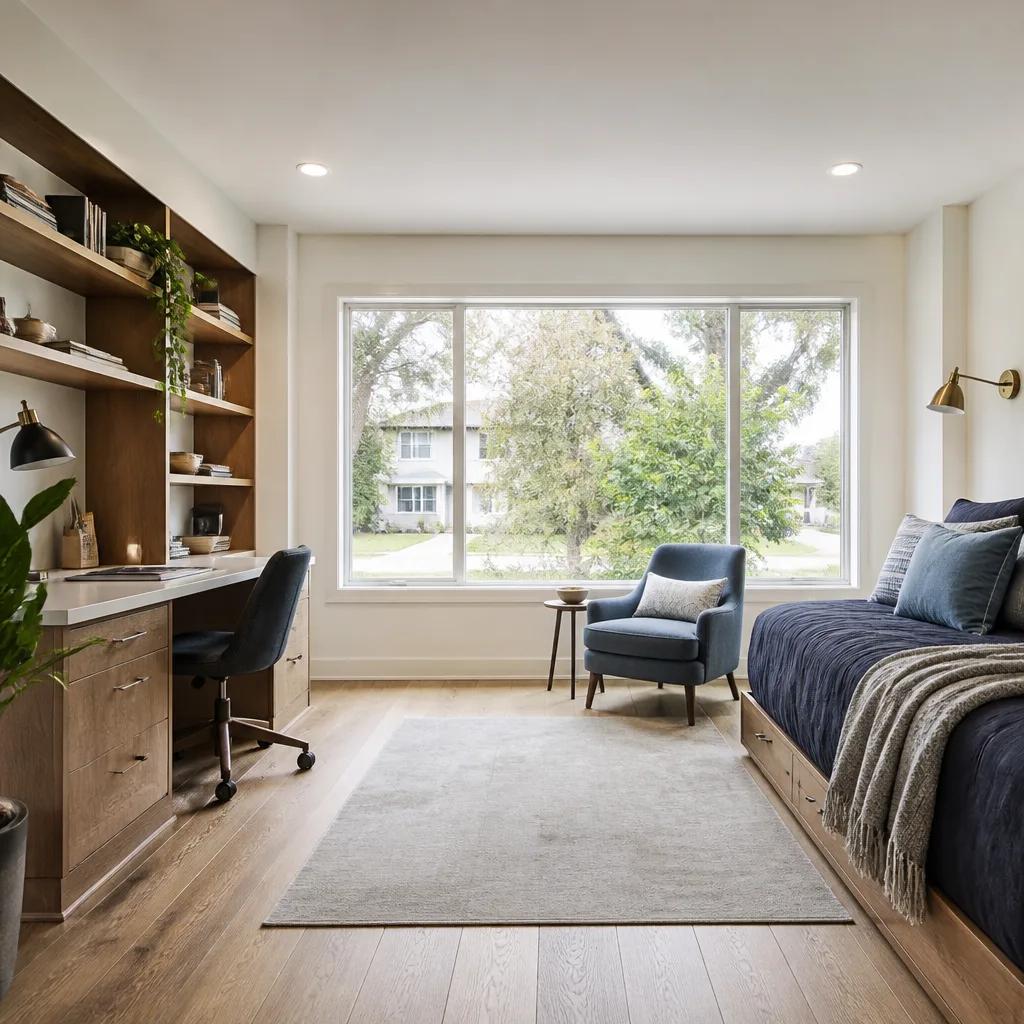
Most CGI additions we see in Austin fall into two buckets: the modular panel systems built on pier-and-beam foundations, and the heavier frame-and-panel construction over slab. The distinction matters because the repair approach is completely different. Pier-and-beam failures usually trace to the piers themselves settling unevenly. Slab failures are trickier since you’re working against the concrete itself.
On the OEM versus aftermarket question: for structural components like corner connectors, wall ties, and roof brackets, we recommend staying with CGI-manufactured parts whenever they’re still available. The tolerances matter, and a generic connector that’s off by an eighth of an inch creates stress points that fail early. For interior finishing parts, door hardware, window trim, and cabinet pulls, quality aftermarket equivalents from brands like KraftMaid and Cambria perform just as well and often give you better selection in Austin’s supply houses. We’re an independent contractor, not affiliated with CGI, so we’ll give you the straight answer on which parts need the OEM stamp and which ones don’t.
One compatibility gotcha we hit often: older CGI additions from before roughly 2012 used a narrower wall profile than current production. If you’re matching a replacement wall section, measure the actual stud depth. Don’t assume. A 3.5-inch versus 4-inch stud cavity changes how the corner channels fit, and you won’t know until the panel won’t seat.
Styles & brands we work with







Signs Your CGI Home Additions & ADU Is Failing
- Doors that won’t stay closed or latched. When a CGI addition settles unevenly, the door frames rack slightly. The door swings open on its own or the latch misses the strike plate. This isn’t humidity, it’s movement.
- Cracks at the wall-to-ceiling joint that reappear after patching. The seam between the wall panel and the ceiling channel is a stress point. If you patch it and it cracks again within a season, the panel is still moving.
- Windows that bind when you try to open them. Like the doors, a window frame that’s no longer square means the wall assembly has shifted. In Austin’s hot summers, this also starts letting conditioned air leak out.
- Visible rust or corrosion on the metal corner channels or wall ties. CGI’s original hardware was rated for humid climates, but ten-plus years of Central Texas temperature swings and occasional roof leaks will compromise the protective coating. Once you see flaking rust, the fastener is losing strength.
- A floor that slopes or bounces in one spot. This one’s serious. If the floor of your addition feels spongy underfoot or a marble rolls toward the same corner every time, the foundation or the floor framing is no longer holding. Don’t wait on this one.
See the difference
 Before
 After
After Before
 After
After Before
 After
AfterReplacement Cost & What’s Included
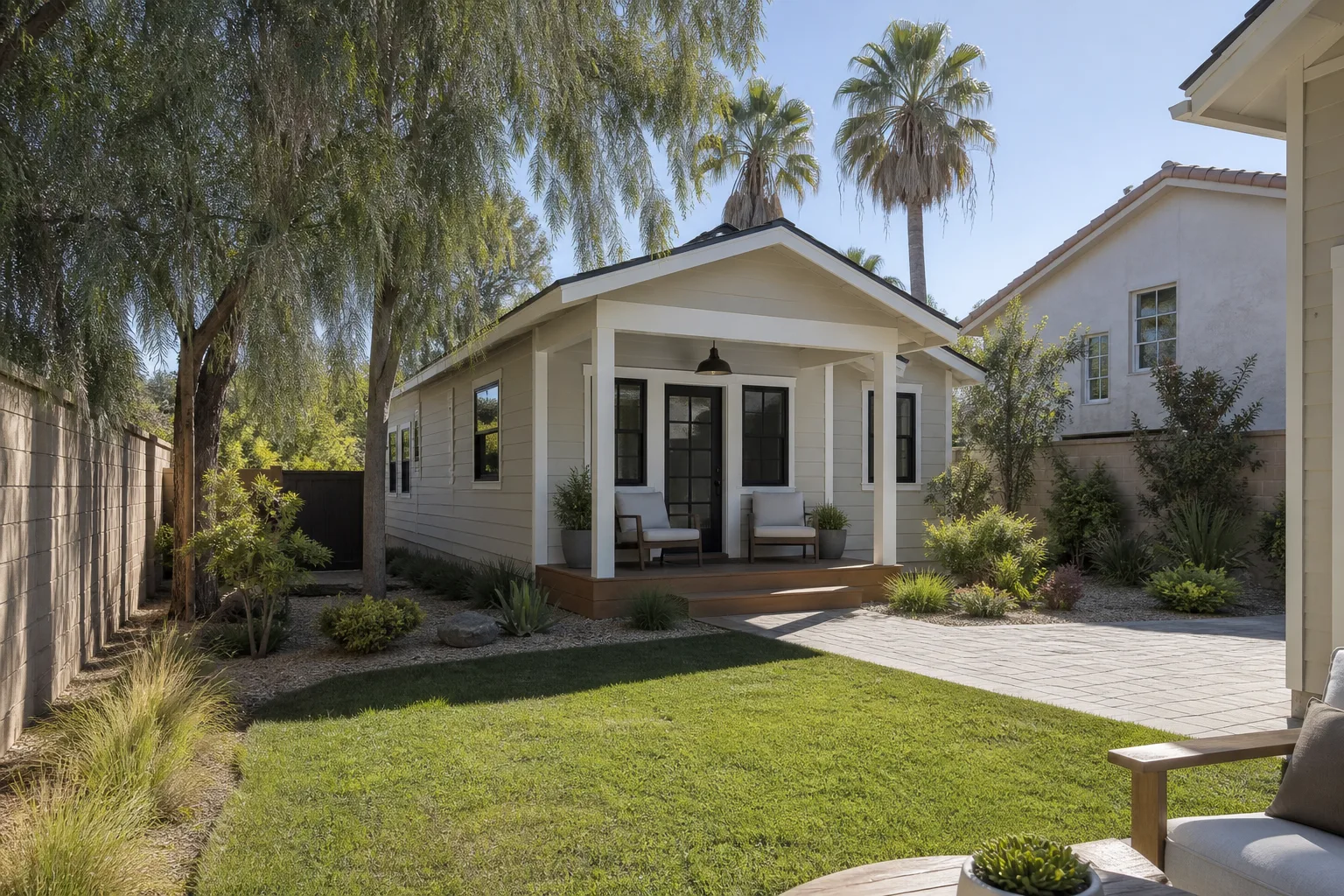
For CGI additions and ADUs in Austin, full replacement work runs $45,000 – $130,000. That’s the honest range. On the lower end, you’re looking at re-leveling a pier-and-beam foundation, replacing failed panel sections, and refinishing the interior. On the higher end, you’re pouring new foundation work, replacing the entire wall assembly, upgrading insulation to current code, and pulling permits for the whole job.
What drives the cost more than anything is what’s hidden until we open the walls. Rotted framing from a slow roof leak. Foundation piers that need to go deeper than the original. Electrical that was never done to code. We give you a written price before any tool comes out, and if we open the wall and find something the original builder buried, you’ll know exactly what it costs before we proceed. The price we write down is the price you approve. No change orders, no surprise at the invoice.
Every CGI addition or ADU project we complete in Austin carries our 365-Day Done Right Promise in writing. If something we fixed doesn’t hold, we’re back to make it right. That’s the whole point of the guarantee.
DIY or Call Us?
There are a few things you can safely check yourself. Walk the perimeter and look for gaps where the addition meets the main house. Check for debris built up against the foundation piers. Look inside cabinets and closets for cracks in the wall panels. These observations help you decide whether to make the call.
What you shouldn’t do is attempt to jack and re-level a settling addition yourself. That requires understanding load paths, and a wrong move can crack drywall throughout the main house or, worse, drop the structure. Same goes for cutting into a load-bearing wall panel. If you’re wrong about which wall is carrying weight, you’re turning a $5,000 repair into a $50,000 problem. Call (409) 834-4854. We’ll look at it, tell you what’s actually wrong, and hand you a written price before anything gets touched.
FAQs
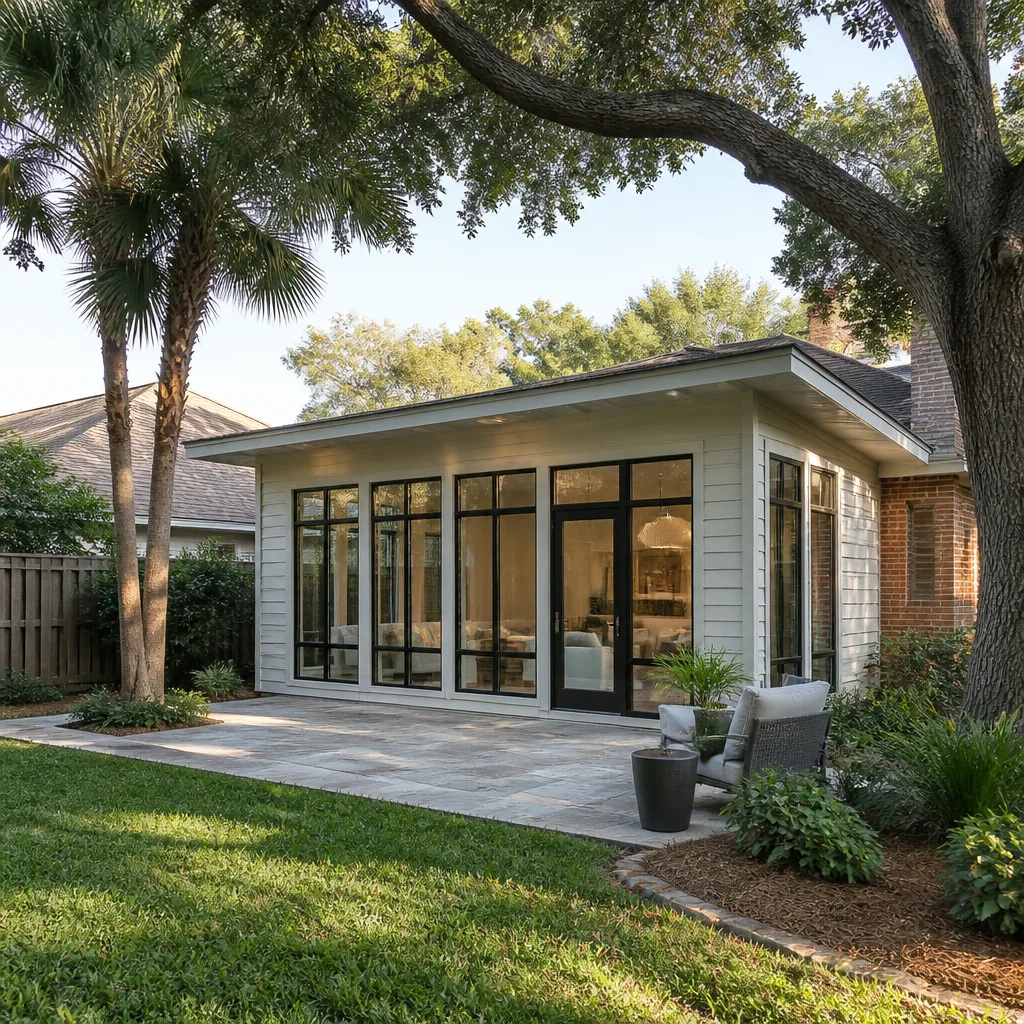
A properly installed CGI addition should last 30 to 50 years in Central Texas, but that assumes the foundation was built right and the roof has been maintained. We’ve seen failures in as little as eight years, and almost always the cause is foundation settling or water getting where it shouldn’t. Call (409) 834-4854 and we’ll inspect what you’re working with.
Most CGI failures can be repaired if we catch them early. Foundation re-leveling, panel replacement, and hardware swaps are all doable. Replacement only makes sense when the wall assembly has degraded enough that patching costs more than rebuilding. The estimate is free, so you’ll know which one you’re in.
Most mid-size repair jobs run two to four weeks depending on foundation scope and what we find once the walls are open. A full ADU replacement can run eight to twelve weeks. We’ll give you a schedule with your written estimate so you can plan around the work.
We keep common corner connectors, wall ties, and mounting hardware on hand in our Austin stock, and we can source OEM CGI panels and channels within days through our supplier network. Less common model-specific parts may take a week or two. We’ll tell you the lead time before you commit to anything.
Written by Luca Romano, Owner, Sawyer Remodel Austin at Sawyer Remodel Austin, serving Austin and nearby areas.


