



Free written scope consultation - allowances, timeline, and change-order rules on paper before a single trade is scheduled
Cover Home Additions & ADU: The Austin Owner’s Guide
If you’re holding a Cover home additions & ADU component that’s worn out, cracked, or stopped working the way it should, here’s the straight answer: we stock and install Cover-compatible home additions and ADU parts across Austin, with most full replacements landing between $45,000 and $130,000 installed depending on scope, square footage, and what else has to move. We’re Sawyer Remodel Austin, an independent general contractor and part of the Relay Home Co. family since 2005 – not affiliated with the Cover brand itself, but we’ve kept their systems running in homes from Bouldin Creek to Wells Branch. Most owners discover a failing Cover home addition or ADU the same way: a door stops sealing, a floor feels soft underfoot, the mini-split stops pulling moisture out of the air, or a wall seam opens up after a wet spring. You don’t always hear it first. You feel it.
Luca Romano has been swinging hammers on this kind of work for over two decades, and he’ll tell you the same thing he tells every Austin homeowner: a home addition is only as good as the parts holding its envelope together. When one piece fails, the rest follow. That’s why we stock common Cover-size components on the truck and write the price down before we touch anything.
Which Cover Models This Applies To
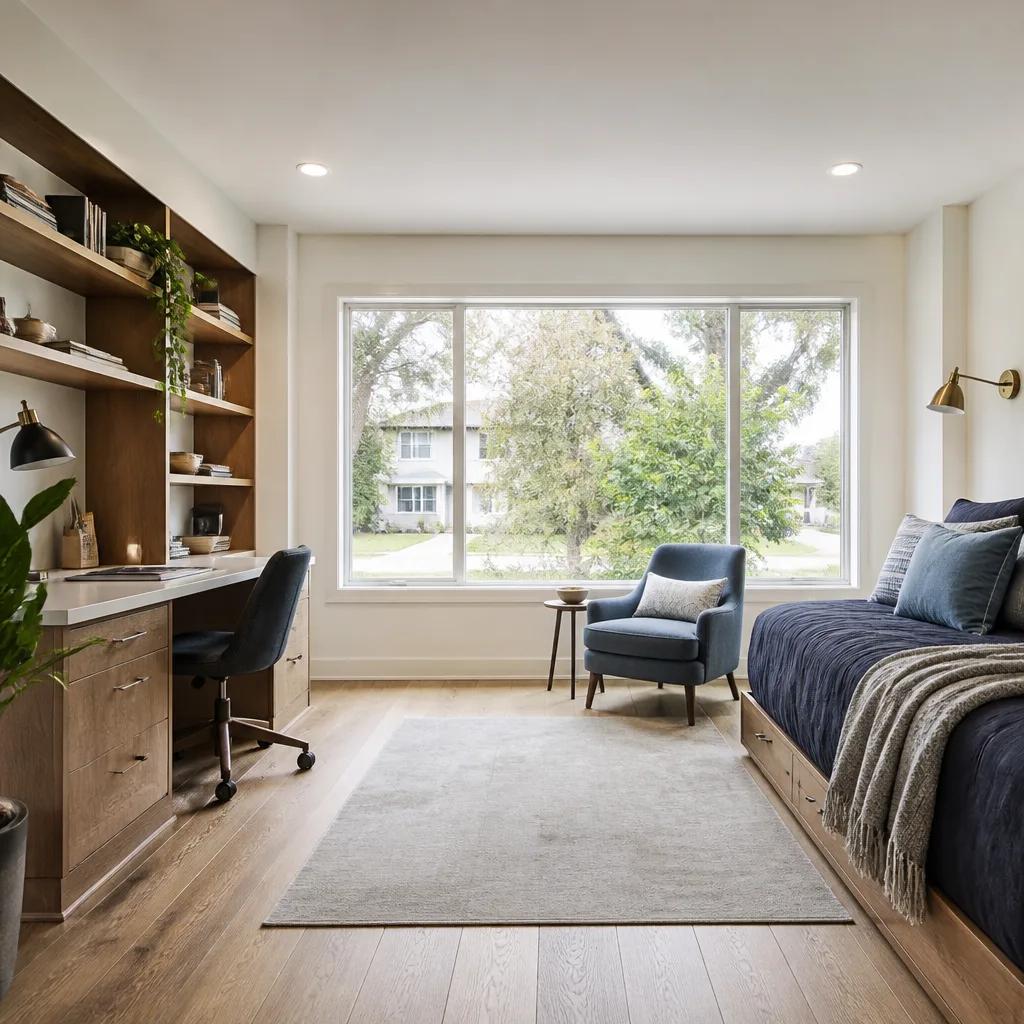
Cover home additions and ADUs in Austin fall into a few recognizable configurations: single-module studio units, L-shaped one-bedroom additions, and larger two-bedroom setups that tie into the main house through a breezeway or shared wall. The compatibility gotcha most owners hit is the panel and flashing system. Cover uses a proprietary interlocking wall panel system with a 24-inch on-center stud profile matching standard 2×6 framing, but the seam gaskets and corner channels are not interchangeable with generic modular brands. If you’re replacing a door jamb, window buck, roofline trim, or threshold pan, you need parts cut for Cover’s specific 4-inch and 6-inch reveal profiles. You’ll know which one you have by measuring the exposed trim width at any door or window opening.
OEM Cover parts are built to the original tolerances and finish-matched to the surrounding panels. Aftermarket equivalents from regional Texas suppliers can work for simple replacements like thresholds, weatherstripping, and flashing, but we steer clear of them for structural connections and waterproofing details. The sealant chemistry matters in Austin’s heat-and-then-freeze winters. A generic silicone from a big-box store will fail in two seasons. We spec the same class of UV-stable polyether sealant the original spec called for. For most Cover units built after 2018, the roof membrane is a TPO system with welded seams. Before that, expect a mechanically fastened PVC membrane. Both repair differently, and using the wrong repair kit on a TPO roof voids the material warranty and starts a leak you won’t see until the ceiling stains.
Texas heat is hard on Cover modules. The expansion and contraction cycles between July and January will find any joint that wasn’t sealed right, and once water gets behind a panel, the OSB sheathing starts swelling. That’s the root of most Austin home addition failures we see.
Styles & brands we work with







Signs Your Cover Home Additions & ADU Is Failing
- Doors that suddenly stick or won’t latch after a temperature swing. That’s the frame or floor system moving more than it should, usually a sign the subfloor connection at the main house tie-in has loosened or a rim joist is starting to rot. The panel gaps at the corners will tell you the direction of the movement if you look closely.
- Soft spots in the floor near any exterior wall. This is the classic water intrusion signature in Austin. A roof penetration, failed window flashing, or a hose bibb that drips behind the panel will rot the subfloor from underneath. You feel the bounce before you see the stain. Once you feel it, the fix is beyond a patch.
- Musty smell inside the ADU that doesn’t clear when you run the mini-split. Moisture is trapped in the wall cavity or under the floor. The mini-split is actually pulling moisture out of the air, which means the source is behind the finished surface. That’s a humidity problem caused by a failed air barrier, not an air quality problem.
- Visible gaps at the panel seams or a corner trim piece that has pulled away from the wall. Panels expand and contract as a unit. A gap opening up means the fastener pattern at the corner has broken or the sealant bead has sheared. The panel might still be sound, but the waterproofing has failed at exactly the worst place to lose it.
- The roof drains slower than it used to, or you see standing water 48 hours after rain. Austin doesn’t get constant rain, but when it comes in spring, it comes hard. Flat or low-slope Cover roofs that hold water are telling you the tapered insulation has saturated or the roof membrane has developed a sag. Standing water on a TPO roof will find a seam weld and test it every single time.
See the difference
 Before
 After
After Before
 After
After Before
 After
AfterReplacement Cost & What’s Included
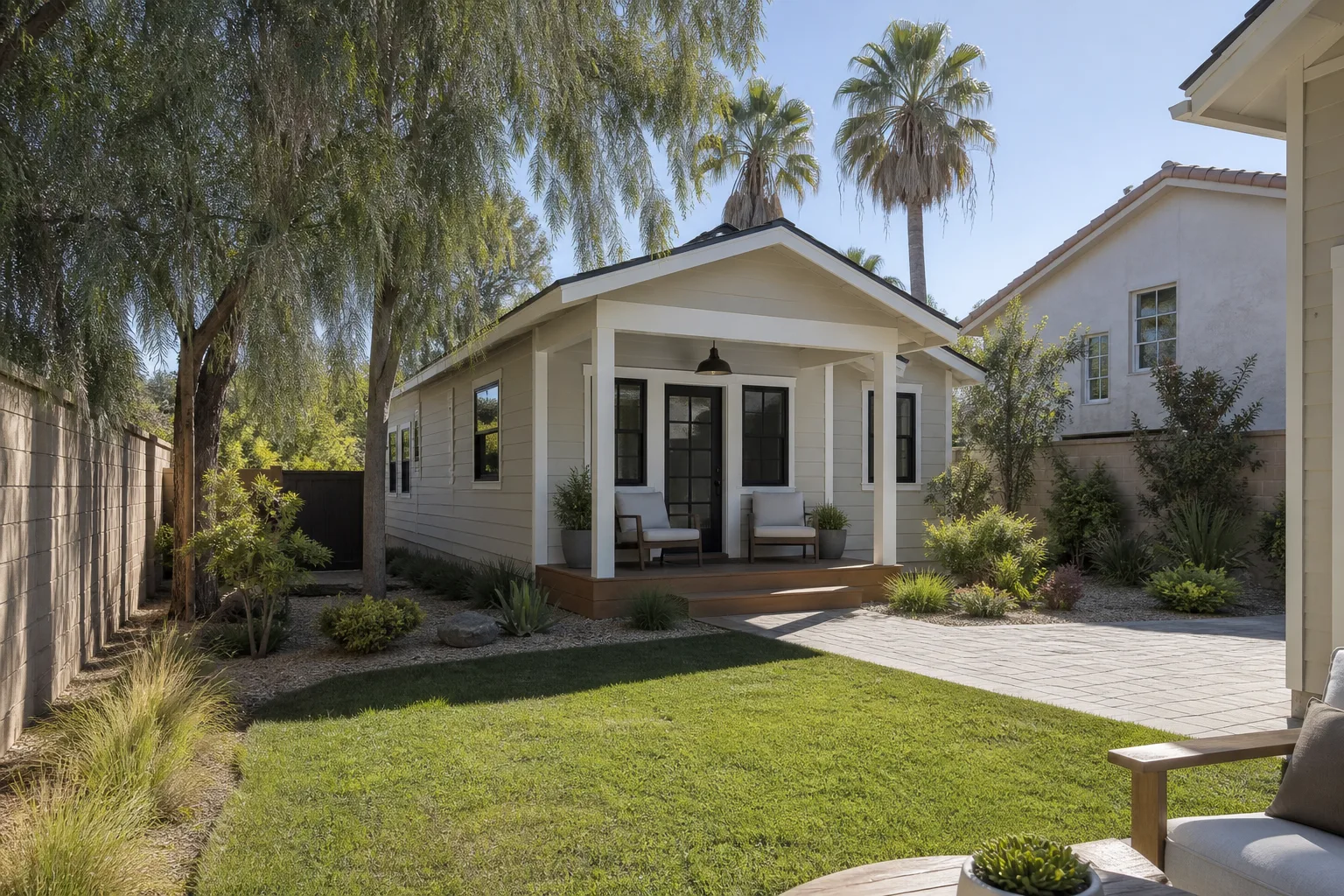
For a full Cover home addition or ADU replacement in Austin, you’re looking at $45,000 to $130,000, with standalone ADU construction running higher at $90,000 to $220,000 when it’s a ground-up build. That range covers everything we’ve seen in Travis County: the low end is a straightforward panel replacement and re-flash on an existing foundation; the high end is a full dismantle of the failing module, new subfloor, new roof membrane, and interior finish work to match the existing space.
What drives the price:
- Foundation condition. Older Cover units in Austin sit on pier-and-beam foundations that shift in the clay soil. If the piers have moved, the module moves, and that work comes before any part replacement.
- Roof system condition. A small TPO patch is one price. Replacing the entire membrane because a seam failed near the tie-in is different work entirely.
- How much of the panel system has to come apart. One wall section vs. a corner-to-corner re-skin changes labor by weeks.
- Whether the ADU has electrical or plumbing that has to be disconnected and reconnected. That’s a master electrician or plumber on the job, and that labor is part of the written price, not a surprise line item.
Every quote is a written line-item price before work starts. The number on the estimate is the number on the invoice. We run every Cover parts job under The Relay Visibility Guarantee: live arrival time, before-and-after photo updates, and a digital invoice you pay from a link. No change orders, no “we found something” markup at the end. If it’s not done right, our 365-Day Done Right Promise means we make it right. In writing. On every single job.
You’ll also have access to material partners like KraftMaid and Cambria if the interior of the ADU needs to come back together with new flooring, counters, or cabinetry. We stock those lines because Austin homeowners doing a home addition replacement usually don’t want to re-do the space with mystery materials.
DIY or Call Us?
Some of this you can check yourself. Walk the perimeter after a heavy rain and look for water staining at the panel base. Test the door operation at different temperatures. Check the mini-split filter. Those tell you if you have a problem. What you shouldn’t do is start pulling panels off a Cover module to “have a look.” The interlocking system is under tension at the corners, and the waterproofing details are sequenced. Remove the wrong panel first and you’ve just turned a $1,500 repair in Bouldin Creek into a $20,000 re-skin. Same goes for the roof. The TPO welds on a Cover addition require a hot-air gun and a steady hand. One bad weld in the middle of a repair means the next hard rain gets inside. If the problem is structural, call us. If you can see water damage, call us. If you’re not sure which Cover series you have, call (409) 834-4854 and we’ll pull the details together from photos before you spend a cent.
Measure twice, cut once – then we actually build the thing.
FAQs
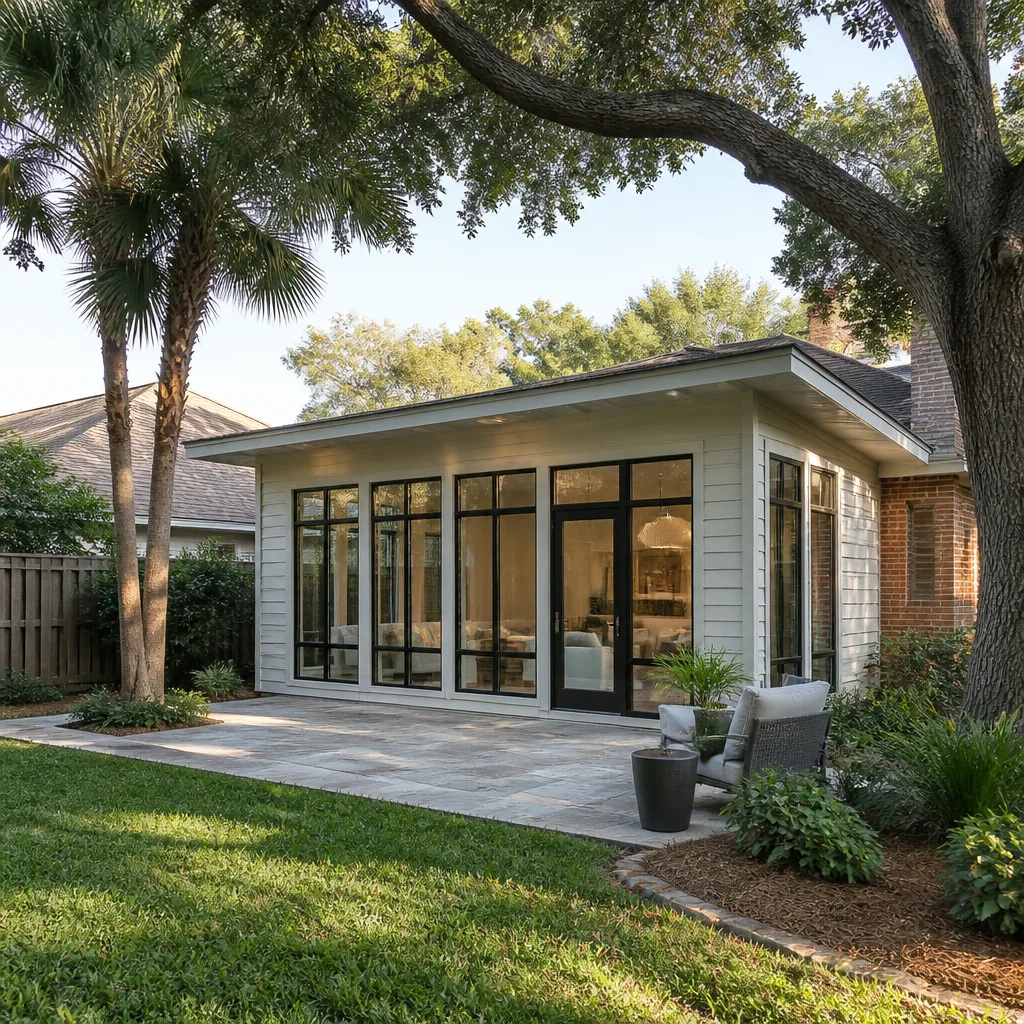
Cover home additions and ADUs in Austin typically hold up 15 to 25 years before major envelope components need replacement, but the Texas sun and occasional hard freezes shorten the sealant and membrane life to 8 to 12 years even on well-built units. We see the first signs of aging at the roof seams and door thresholds long before the structural panels fail. Call (409) 834-4854 if your unit is in that range and you’re starting to see signs of water or movement.
Yes, in most cases a failed Cover part like a door threshold, window buck, roof seam, or wall panel can be repaired rather than replacing the entire unit, and the repair decision depends on whether the water intrusion has reached the subfloor or framing. If we catch a sealant failure early, the repair is measured in hundreds, not thousands. If the subfloor has gone soft, the repair becomes a replacement. Call us for a straight read on which category you’re in – estimates are free.
Most Cover part replacements take two to five working days for a single component, while a full panel re-skin or roof membrane replacement can run two to four weeks depending on weather and whether the interior has to be opened up. We schedule around Austin’s spring and fall weather windows because roof work and sealant laydown need dry conditions above 50 degrees. We’ll give you a start date and a finish date in writing before work begins.
We stock the common Cover-compatible parts on the truck: threshold pans, door weatherstripping, seam gaskets, panel fasteners, TPO patch material, and the polyether sealant specified for the system. Larger items like full wall panels, roof membrane rolls, and structural connectors we order per job with a two-to-three day lead time from our Austin-adjacent suppliers. If you send photos of your failing part, we’ll confirm whether it’s a same-visit fix or a scheduled order before we roll out.
Call Sawyer Remodel Austin at (409) 834-4854 to schedule your free estimate. We’ll walk the unit, identify the exact Cover part that failed, give you a written price, and tell you honestly whether the rest of the system is worth saving. No pressure. No four-hour windows. Just a straight answer from a crew that’s been doing this work in Austin long enough to know what the heat does to a home addition.
Written by Luca Romano, Owner, Sawyer Remodel Austin at Sawyer Remodel Austin, serving Austin and nearby areas.


