





Free written scope consultation - allowances, timeline, and change-order rules on paper before a single trade is scheduled
Jerith Home Additions & ADU: The Austin Owner’s Guide
A Jerith home addition in Austin typically runs $45,000 to $130,000 installed, and ADU construction lands between $90,000 and $220,000 depending on square footage, foundation work, and utility runs. We stock Jerith-compatible framing hardware, fasteners, and structural connectors on our trucks, which means most addition and ADU framing repairs don’t wait on a parts order. Homeowners usually discover they need us when a permit inspection flags undersized framing members, the existing Jerith structure shows signs of settling that wasn’t caught during the original build, or they’re ready to expand and need someone who knows how Jerith systems tie into Austin’s soil conditions.
Luca Romano has been reading floor plans and calling out structural problems before demo starts for twenty years. When it comes to Jerith additions, the issue is rarely the hardware itself. It’s how the original structure interacts with Austin’s expanding clay soil, our summer heat cycles, and drainage patterns that shift after a neighbor builds up or a tree comes down. We’re an independent Austin contractor, not affiliated with Jerith directly, but we work with their components every month and know what holds up.
Which Jerith Models This Applies To

Jerith manufactures residential fencing and structural aluminum systems, and their home addition and ADU components cross over into pergola framing, patio covers, and structural posts that support attached additions. The compatibility gotcha most Austin homeowners hit: Jerith’s aluminum post systems are not interchangeable with steel Simpson Strong-Tie connectors without an isolation bushing. Aluminum and steel in direct contact creates galvanic corrosion, and in Austin’s humidity that joint fails in three to five years. You’ll see white powder forming at the fastener, then the post base loosens.
To identify your Jerith part, look at the post base or bracket for a stamped series code. Most Jerith structural components carry a four-digit stamp on the concealed face of the bracket. Measure the post width, the bolt-hole spacing in millimeters, and note whether the post is square or fluted. If the part isn’t stamped or the stamp is worn off, bring a photo and measurement to us. We’ll match it to the correct series. For most addition and ADU applications, OEM Jerith brackets run slightly more than aftermarket equivalents, but with Jerith the extrusion tolerances are tight enough that an off-brand bracket usually means wallowing out the hole to fit, which weakens the connection. For structural components, we recommend OEM. For non-structural trim and caps, a quality aftermarket equivalent is fine and saves 20 to 30 percent.
Styles & brands we work with







Signs Your Jerith Home Additions & ADU Is Failing
- Gaps opening at slab edges or brick veneer seams. Austin’s clay soil expands during wet springs and contracts through drought summers. That movement telegraphs upward through Jerith posts and connectors. A hairline crack at a seam can be cosmetic, but if you can slide a quarter into the gap, the structural connection has shifted.
- Doors or windows in the addition bind at the top corner. This means the header or the post under it has dropped. In Jerith aluminum-framed additions, the usual cause is a post base that has corroded at the anchor or a connector bolt that has sheared under wind load.
- White powder or pitting at any metal-to-metal joint. That’s galvanic corrosion. Once it starts at a bracket, it travels into the post extrusion. Left alone for another season, the post wall thickness drops below structural spec.
- Water staining on interior drywall near roofline connections. Jerith patio covers and addition roofs use a drip-edge profile that can separate from the fascia after repeated thermal cycling. The stain shows up months before the rot becomes structural.
- A lean you can see from the street. Stand at the property line and sight the wall. Any visible tilt beyond a quarter-inch over eight feet means the base plate or anchor system has failed. This is the one that requires immediate attention in Austin because spring storms turn a leaning wall into a sail.
See the difference
 Before
 After
After Before
 After
After Before
 After
AfterReplacement Cost & What’s Included
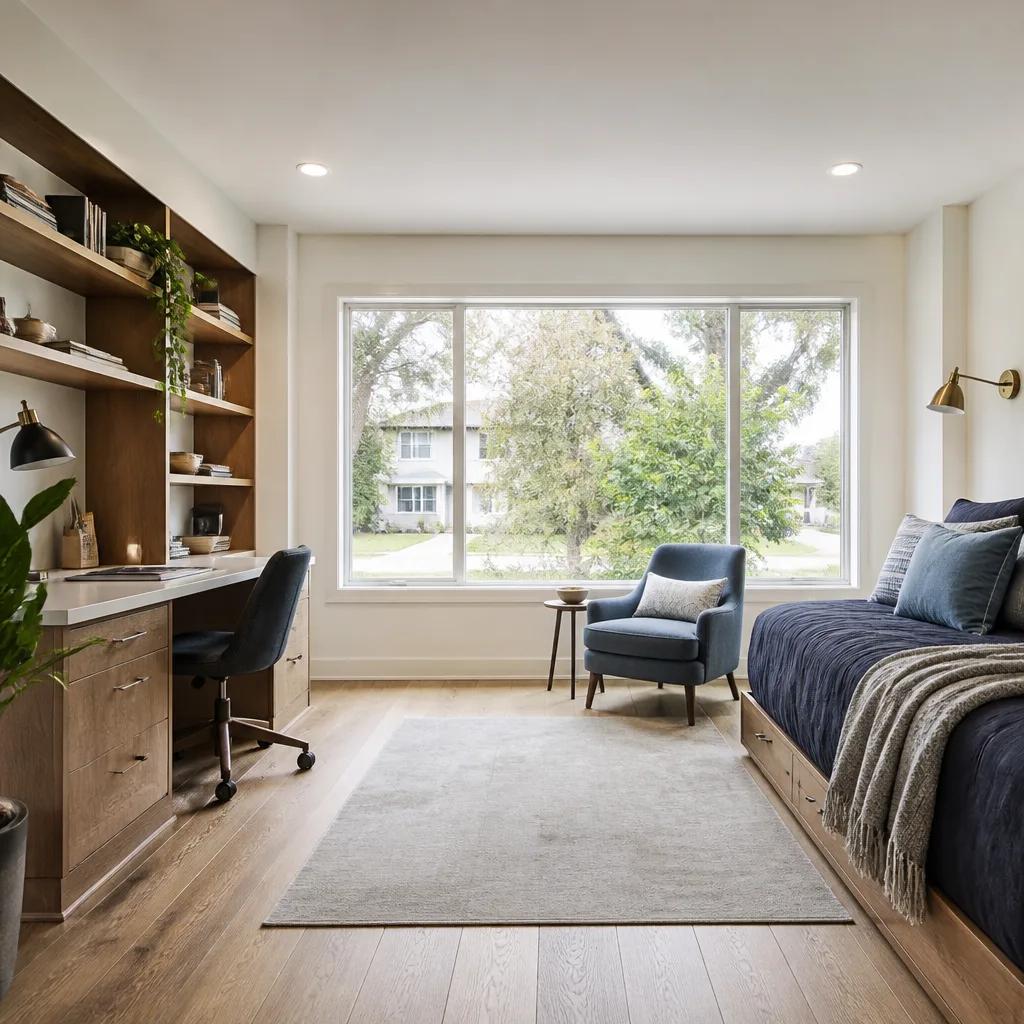
In Austin, the line-item pricing you see below is what you’ll pay. We write the number before we pick up a tool, and that number is the number on your invoice. No change orders, no “we found something” surprises at the end.
- Home Addition: $45,000 – $130,000
- ADU Construction: $90,000 – $220,000
- Garage Conversion: $30,000 – $80,000
What drives the range is straightforward. Footing and foundation work runs higher when we hit limestone shelf rock, which happens in the western parts of Austin like the hills off 2222. Flat-lot additions in Bouldin Creek or Barton Hills with good soil and existing slab access land on the lower end. The installed price includes demo, permits, structural hardware, rough and finish framing, tie-ins to existing systems, and a final walkthrough with photo documentation. Every job carries our 365-Day Done Right Promise: if it’s not right, we make it right, in writing.
DIY or Call Us?
You can inspect your own Jerith structure safely. Look at post bases, check for white powder at joints, sight the walls, and photograph anything that looks off. Send us the photos and we’ll tell you whether it’s a real problem or just Austin’s clay soil doing normal things. That service is free and it’s how we’d want someone to treat our own house.
What you shouldn’t DIY is removing or reinstalling any structural connector on an addition or ADU. A failed post base on a Jerith aluminum system is under load. Pulling the wrong bolt can shift the entire wall section, and that’s how someone gets hurt and a permit gets pulled. This is structural work. It requires shoring, sequencing, and an engineer’s letter in most Austin permits. If the part in question carries roof load, call us. We’ll assess it, give you a written price, and if it’s a two-hour bracket swap we’ll tell you that too. Measure twice, cut once, then we actually build the thing. Call (409) 834-4854 to schedule a free estimate.
FAQs
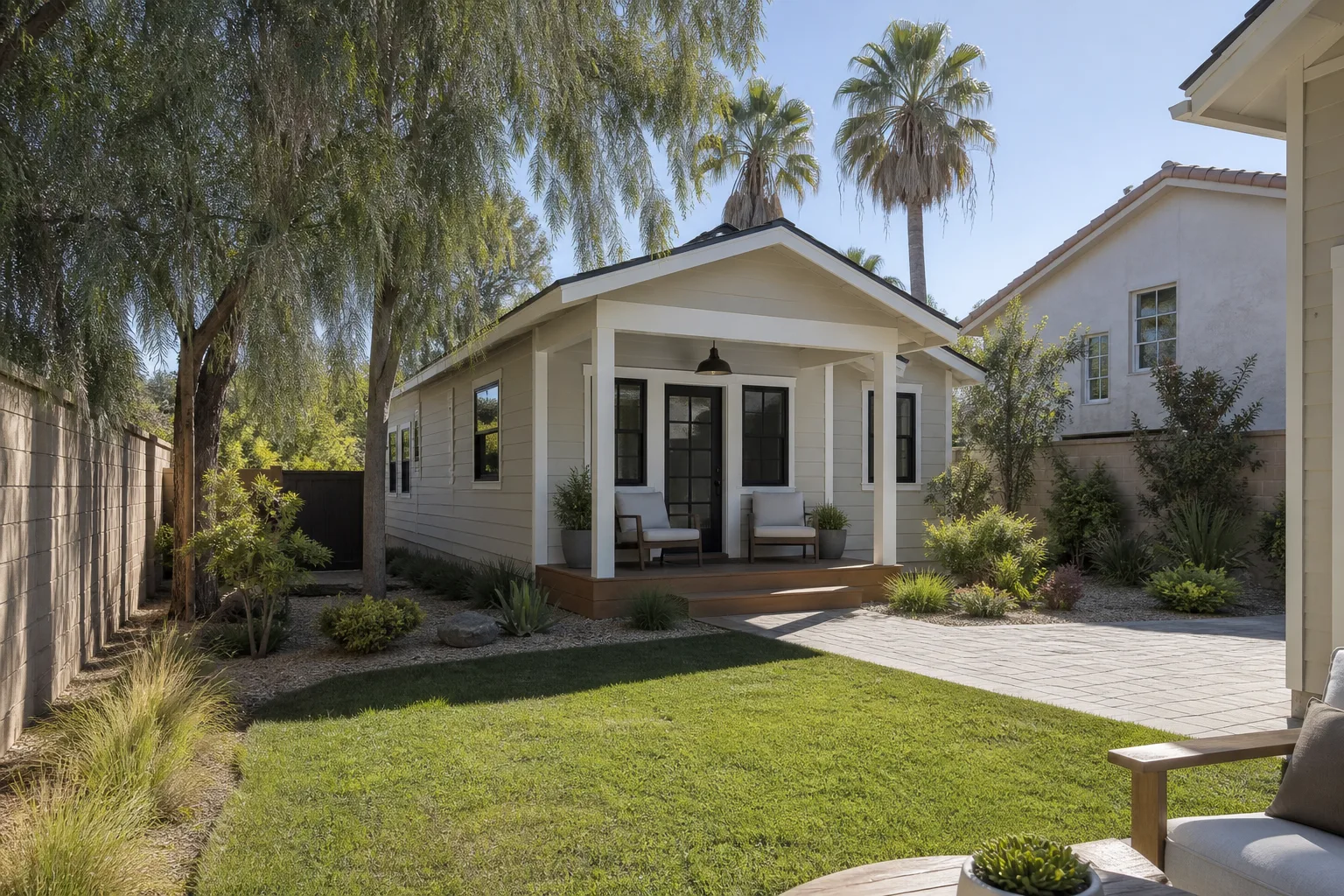
Jerith aluminum structural components typically last 20 to 30 years in Austin’s climate, but galvanic corrosion at mixed-metal joints can cut that to 8 to 10 years if the original installer skipped isolation bushings. We replace failed Jerith brackets in Austin on a regular basis; the fix, including labor, usually runs $800 to $2,500 depending on access. Call (409) 834-4854 and we’ll quote it for your specific structure.
Most failed Jerith post bases can be replaced as a single component without rebuilding the wall or roof section. We shore the load, remove the corroded bracket, install the correct OEM replacement with isolation, and re-anchor. The exception is when corrosion has traveled up into the post extrusion itself, at which point the post needs replacement too. Call (409) 834-4854 for a free inspection and written quote.
A single post base or bracket replacement typically takes half a day on site, including shoring and re-anchoring. A full addition or ADU project runs 10 to 20 weeks depending on permitting, foundation work, and finish scope. We’ll give you a written schedule before any work starts, and The Relay Visibility Guarantee means you’ll see photo updates before and after each phase. Call (409) 834-4854 to talk through your timeline.
We stock Jerith-compatible post bases, connectors, bushings, caps, and fasteners on our trucks for the most common series found in Austin additions and patio covers. Less common series or custom extrusions are ordered from Jerith distributors and usually arrive within 5 to 7 business days. We’ll tell you at the estimate which bucket your part falls into. Call (409) 834-4854 for availability on your specific part.
Written by Luca Romano, Owner, Sawyer Remodel Austin at Sawyer Remodel Austin, serving Austin and nearby areas.


