



Free written scope consultation - allowances, timeline, and change-order rules on paper before a single trade is scheduled
Mr-Glass Home Additions & ADU: The Austin Owner’s Guide
A Mr-Glass home addition or ADU in Austin typically runs $45,000 to $130,000 installed, and yes, we handle the full build from foundation to finish. If you’re reading this, you’ve probably hit the moment every homeowner dreads: a permit got flagged, a foundation shifted after a drought year, or the original scope didn’t match what the last contractor actually framed. Here’s the straight answer: we stock the common Mr-Glass-series hardware and components, we know which generations had expansion problems in Texas heat, and we can usually have a crew out to assess within days, not weeks.
Most Austin owners discover the failure the hard way. A door that won’t latch after the slab moves. Drywall cracks radiating from a corner that was never properly flashed. Or the big one: an ADU that passed inspection but now can’t get a certificate of occupancy because the electrical panel is undersized for what was actually installed. You don’t need a new plan. You need someone who can read the old one and fix what’s off.
Key Takeaways
- Installed cost for a Mr-Glass home addition or ADU repair in Austin: $45,000 – $130,000 depending on scope, foundation work, and finish level.
- We carry common Mr-Glass-series framing hardware, door hardware, and flashing on the truck, and can source specialty components from our local Austin suppliers in 2 – 4 days.
- Texas heat and expansive clay soil cause most of what fails here: expansion gaps that were cut too tight, flashing that baked out, and under-slab plumbing that shifted.
- Every repair or build gets a written price before work starts, live arrival tracking, and before-and-after photo updates under The Relay Visibility Guarantee.
- We’re an independent Austin contractor, not affiliated with Mr-Glass, but we’ve been building and repairing their home addition and ADU product line for years.
Which Mr-Glass Models This Applies To

Mr-Glass built home additions and ADUs in three distinct generations across their Austin product line, and each has its own failure profile. The early 2010s units shipped with single-ply window flashing that Texas sun does not forgive. The mid-2010s “Flex” series used a hybrid steel-and-wood frame that moves differently in summer heat than in a cold snap, and that differential movement is where most cracking starts. The current “Plus” line is better built but still has a weak point at the ledger connection where the addition ties into the primary structure.
How do you know which one you have? Look at the manufacturer sticker. It’s typically inside the electrical panel door or on the underside of the main beam near the entry. You want the model code and the serial prefix: the prefix will tell you the production year. If the sticker is gone or faded, which happens fast in an Austin attic, measure the rough opening of your main door. The first-gen units used a 36-by-80 standard, the Flex series went to 36-by-84, and the Plus line used a 42-inch wide opening on the higher trim. That measurement alone narrows it down fast.
On OEM versus aftermarket: for Mr-Glass framing hardware, we recommend OEM or an exact-match equivalent. The miter plates and ledger brackets Mr-Glass used are proprietary in hole-spacing, and a generic Simpson Strong-Tie will not line up without field drilling that compromises the galvanization. For anything cosmetic, door hardware, trim pieces, threshold plates, quality aftermarket is fine and usually costs 30 to 40 percent less. We’ll tell you which is which before you spend a dollar.
Styles & brands we work with







Signs Your Mr-Glass Home Additions & ADU Is Failing
- Doors that stick or won’t latch by late summer. The expansive clay under most Austin homes swells in wet spring and shrinks in the August bake. A Mr-Glass addition with an undersized expansion joint binds at the door. The fix is usually a threshold adjustment, not a foundation repair; but we’ll level-check the slab to confirm.
- Diagonal drywall cracks at the corners, especially the upper outside corners near the roofline. That’s racking from uneven expansion between the addition and the main house. The underlying cause is almost always a missing or failed shear wall anchor. It looks cosmetic, but it means the structure is moving more than the design allows.
- A “hot wall” inside the addition where the sun hits hardest in the afternoon. First-gen Mr-Glass units were under-insulated for Texas heat gain on the west-facing wall. If you can feel the heat radiating through the drywall on a July afternoon, the cavity insulation has settled or was never sufficient.
- AC runs constantly and the addition still doesn’t hold temperature. Often the duct run from the main unit to the addition was under-sized to save cost. We see it weekly in the Bouldin Creek and Travis Heights additions where the original builder tied the duct into an existing trunk line that couldn’t handle it.
- Water staining at the seam where the addition roof ties into the main roof line. That’s the flashing. On a Mr-Glass seam, the original flashing was often a single piece of aluminum with no kick-out leg. It bakes, it cracks, it leaks. Easy to replace properly, expensive to ignore.
See the difference
 Before
 After
After Before
 After
After Before
 After
AfterReplacement Cost & What’s Included
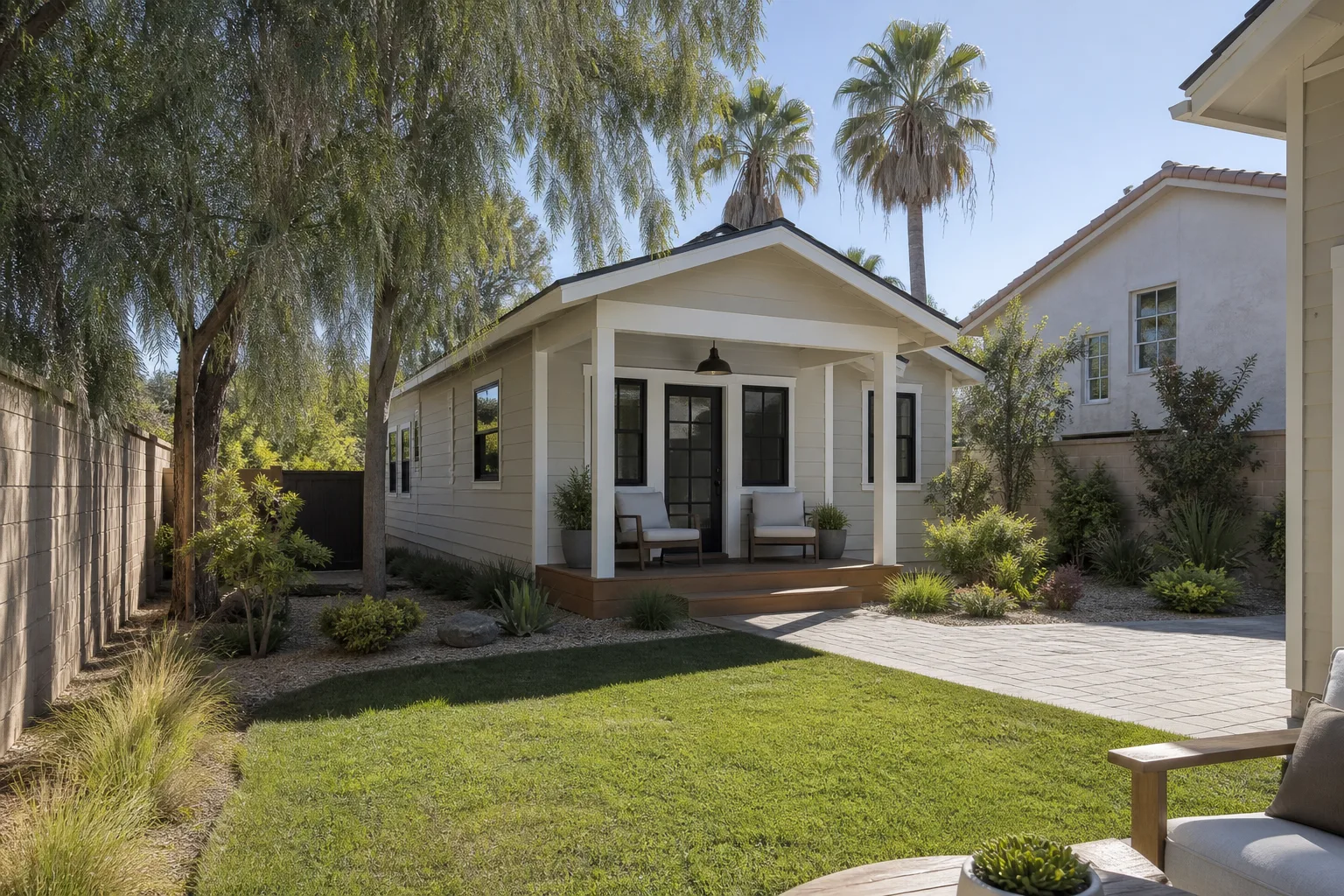
For Austin homes, a Mr-Glass home addition or ADU typically runs $45,000 to $130,000 installed. That’s the honest range. What drives it: the size of the unit, whether foundation work is needed, what finish level you choose, and how much of the existing structure has failed and needs to be opened up. A straightforward repair like a ledger replacement might be under our full-build minimum; a complete gut and rebuild of an ADU can cross $130,000 if you’re into high-end finishes.
Here’s what your number includes, line by line, before work starts: framing materials and hardware, plumbing ties, electrical, insulation, drywall, trim, doors and windows, exterior flashing, and all labor. Permit fees and engineering stamps are separate, and we’ll give you those costs before you sign. We don’t do change orders unless you change the scope. The written price is the price. Every job carries our 365-Day Done Right Promise in writing: if it’s not done right, we make it right. You also get a free second visit if a repair fails within the warranty window.
DIY or Call Us?
If you’re reading this page because a door sticks or a corner cracked, there are things you can safely check yourself. Look at the sticker and write down the model code. Note whether the problem is worse in summer or after rain. Look at the flash seam at the roof tie-in from the ground and see if there’s visible cracking or a pulled-away edge. That information saves us time and you money.
Here’s where DIY goes wrong on a Mr-Glass addition: everything involving the ledger connection. That’s the board that ties your addition to the main structure, and if you remove or loosen the wrong fastener, you’re dealing with a structural problem, not a cosmetic one. Same with anything involving the electrical panel; undersized panels are common in the earlier units and this is not a homeowner repair. Foundation leveling attempts with bottle jacks? Don’t. Just don’t. If you’ve got racking, cracks, or a seam that’s moving, call (409) 834-4854 and let us put eyes on it before you spend a weekend making it worse.
FAQs
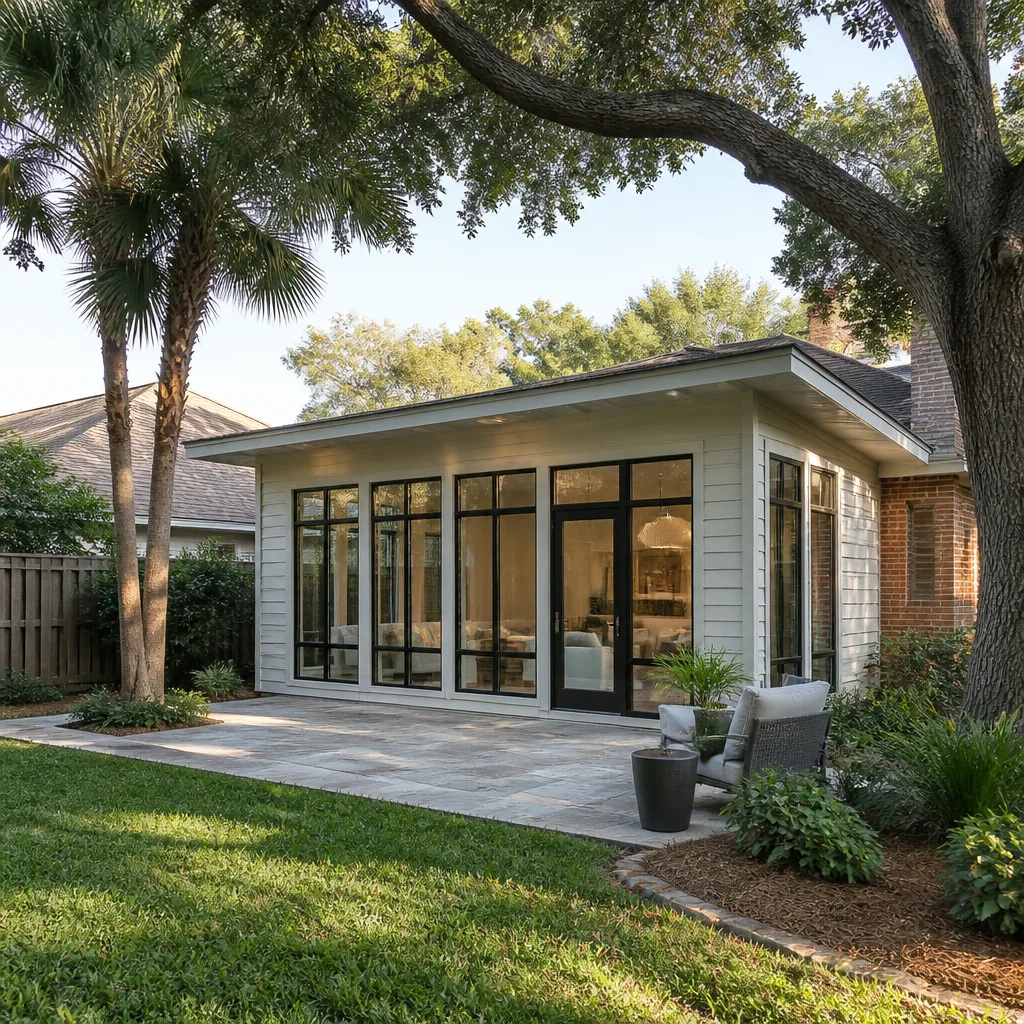
A properly flashed and anchored Mr-Glass addition should last 40 to 50 years in Austin if the expansion joints are maintained and the flashing is replaced on schedule. The first-gen units, without proper flashing and with the undersized joints, often show real problems by year 15 to 20. Texas heat is the main killer, not age. Call (409) 834-4854 for an assessment of your unit’s remaining lifespan.
Most failures can be repaired without a full rebuild. Ledger issues, failed flashing, settled insulation, and door binding are all fixable. Full rebuilds are only needed when framing has rotted or the original construction was fundamentally wrong. We’ll tell you which one you’re looking at before any work starts. Call (409) 834-4854 for a free estimate.
A ledger or flashing repair typically takes two to three working days. A full addition or ADU build runs 60 to 120 days depending on size and finish level, including inspection time. We’ll give you a schedule in writing before work starts. Call (409) 834-4854 and we’ll walk you through a realistic timeline for your specific project.
We stock the common Mr-Glass hardware on the truck: ledger brackets, flashing profiles, door hardware, and threshold plates. Specialty components, like custom miter plates or specific trim profiles, come from our local Austin suppliers in two to four days. We also carry compatible hardware for KraftMaid, Cambria, and Silestone finishes if your interior got upgraded along the way. Call (409) 834-4854 and we’ll confirm what’s on the truck today.
If your Mr-Glass addition or ADU is showing its age, don’t wait until a small crack becomes a structural problem. Call (409) 834-4854 for a free estimate, and we’ll send a background-checked, uniformed technician with a live arrival time and a written price before any work starts. Measure twice, cut once, then we actually build the thing.
Written by Luca Romano, Owner, Sawyer Remodel Austin at Sawyer Remodel Austin, serving Austin and nearby areas.


