


Free written scope consultation - allowances, timeline, and change-order rules on paper before a single trade is scheduled
Oldcastle Home Additions & ADU: The Austin Owner’s Guide
Oldcastle home additions and ADU projects in Austin typically run $45,000 – $130,000 for a room addition and $90,000 – $220,000 for a full ADU, depending on square footage, foundation work, and finish level. We install and build Oldcastle-compatible structural components, and most homeowners call us when they spot drywall cracks spreading from a corner, sagging rooflines over an addition, or a door that suddenly won’t latch after a storm. The failed part is rarely the addition itself; it’s almost always a connection point, a header, or a foundation tie that was undersized or installed wrong the first time.
We’re an independent Austin remodeling contractor, not affiliated with Oldcastle. That matters because we stock and source Oldcastle-spec materials without being tied to one manufacturer’s lead times. When your addition’s framing or tie-down hardware has failed, you want a crew that knows which Oldcastle product line your structure used and what actually holds up in Austin’s clay soil and 100-degree summers.
Which Oldcastle Models This Applies To

Oldcastle produces concrete masonry units, retaining wall systems, pavers, and structural precast products under several lines commonly used in Austin additions and ADUs. The ones we see most often in service calls are the Belgard wall and paver systems, Anchor concrete blocks, and Oldcastle precast lintels and headers. If your addition sits on an Oldcastle block stem wall or uses their precast members, the failure often traces to a specific product series, not the whole structure.
Here’s the compatibility gotcha: Oldcastle block and precast components are manufactured to load specs that assume specific mortar types and tie spacing. If the original builder swapped in a different mortar strength than what the product data sheet called for, you’ll see step cracking in the block joints within three to five years in Austin’s expansive clay. We identify the exact product by looking for the manufacturer stamp on the block face or the ink-jet code on precast beams. Before quoting any repair or addition work, we measure the existing members and match the load rating, not just the dimensions. OEM Oldcastle components are always our first recommendation for structural pieces. For non-structural elements like paver caps or wall toppers, quality aftermarket equivalents from a local Austin supplier can save 20 – 30% without cutting corners.
Styles & brands we work with







Signs Your Oldcastle Home Additions & ADU Is Failing
- Stair-step cracks in block stem walls. This is the classic Austin expansive-clay failure. The soil swells after rain, pushes the footing, and the wall cracks along mortar joints. It means the foundation tie or the footing depth was insufficient for the soil, and it will keep moving until corrected.
- Doors and windows that stick only during certain seasons. A addition’s framing shifts as the soil moisture changes. If your door binds in spring but operates fine in August, the structure is moving. The fix is usually more than shaving the door; it’s a footing or drainage issue.
- Gaps opening between the addition and the original house. This one gets calls fast because you can see daylight or feel a draft. The addition’s foundation is settling at a different rate than the main structure, and the tie-in detail was likely done without enough slip allowance.
- Sagging or cracked precast lintel above a window or door. Precast lintels crack when they were undersized for the opening or the bearing surface shifted. You’ll see a vertical crack at the center or hairline spalling at the bottom edge.
- Paver settling or retaining wall lean on an ADU site pad. Oldcastle paver and wall systems need proper base compaction and drainage. In Austin’s clay, skipping a geotextile separation layer means the fines from the clay migrate into the base, the pavers settle, and the wall starts to lean within a few seasons.
See the difference
 Before
 After
After Before
 After
After Before
 After
AfterReplacement Cost & What’s Included

For Austin homeowners, Oldcastle-related addition and ADU repair work breaks down like this:
| Scope | Typical Austin Range |
|---|---|
| Structural tie-in repair (one wall connection) | $3,500 – $12,000 |
| Stem wall crack repair with footing stabilization | $6,000 – $18,000 |
| Precast lintel replacement | $1,800 – $5,500 |
| Paver patio or site pad reset with proper base | $3,500 – $11,000 |
| Full home addition (new construction) | $45,000 – $130,000 |
| ADU construction (from foundation to finish) | $90,000 – $220,000 |
Every quote includes a written, line-item price before work starts. You’ll see the exact cost for parts, labor, permits, and disposal. No allowances that turn into surprise change orders. When we pull permits, the inspections pass before we call the job done. And every project carries our 365-Day Done Right Promise: if something isn’t right, we make it right, in writing.
What drives the range in Austin? Soil condition under your slab plays the biggest role. Homes on the east side’s blackland clay move more than homes on limestone shelf in the west hills. Square footage of the repair zone, access for equipment, and whether the original builder actually followed Oldcastle’s install spec all push the number up or down.
DIY or Call Us?
Here’s our honest split. You can safely inspect the cracks yourself: mark the ends of any crack with painter’s tape and a date, then check back in a month. If the crack hasn’t moved, you can watch it. If it grew, call us; something structural is still settling. You can also check drainage around the addition, because a downspout dumping next to a stem wall causes half the clay-related movement for Austin additions.
What you shouldn’t DIY: any repair that involves jacking, shoring, cutting into load-bearing walls, or replacing precast members. Those are high-consequence structural tasks. A header that fails mid-repair can drop a roof on someone, and a shored wall that isn’t braced right can kick out. This is work where the risk isn’t just a bad finish, it’s a collapsed structure. Luca Romano has spent two decades on job sites, and he’ll tell you the same thing he tells his own crew: the cut has to be right the first time, because fixing sloppy structural work costs everybody money. Call (409) 834-4854 and we’ll send someone who knows what they’re looking at.
FAQs
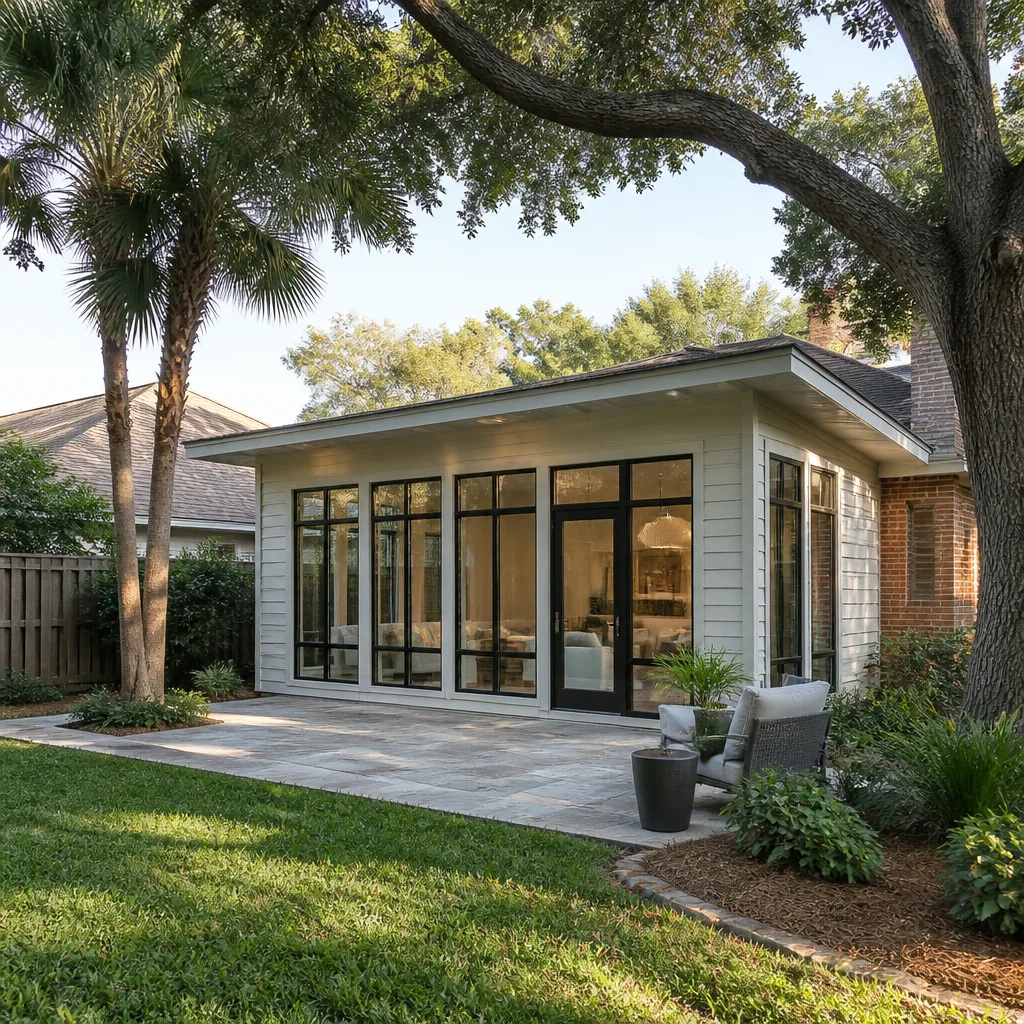
A properly built addition on an Oldcastle block or precast foundation should last 50-plus years, but the connection details and soil prep matter more than the product itself. Austin’s expansive clay means a footing or drainage error shows up within the first decade. Most failures we repair trace to original installation shortcuts, not Oldcastle’s materials.
Repair is almost always cheaper and faster than rebuild, as long as the foundation itself hasn’t failed. We can stabilize footings, reinforce connections, and replace cracked precast members without tearing down the addition. Full rebuilds only make sense when the foundation has moved beyond practical correction. Call (409) 834-4854 and we’ll tell you which one you’re dealing with.
Most repair jobs run three to ten working days on site, depending on permit review time and whether we’re doing foundation work or just framing and finishing. A full addition or ADU build runs three to eight months. We’ll give you a written schedule before you sign, with live progress photos along the way.
We keep common precast lintels, anchor bolts, tie-down hardware, and wall-topping materials in stock for fast repairs, and we source OEM Oldcastle components directly from the regional distributor. If your job needs a custom precast piece, expect a one to two week lead time. Call (409) 834-4854 for an exact match on your project.
Written by Luca Romano, Owner, Sawyer Remodel Austin at Sawyer Remodel Austin, serving Austin and nearby areas.


