





Free written scope consultation - allowances, timeline, and change-order rules on paper before a single trade is scheduled
Quikrete Home Additions & ADU: The Austin Owner's Guide
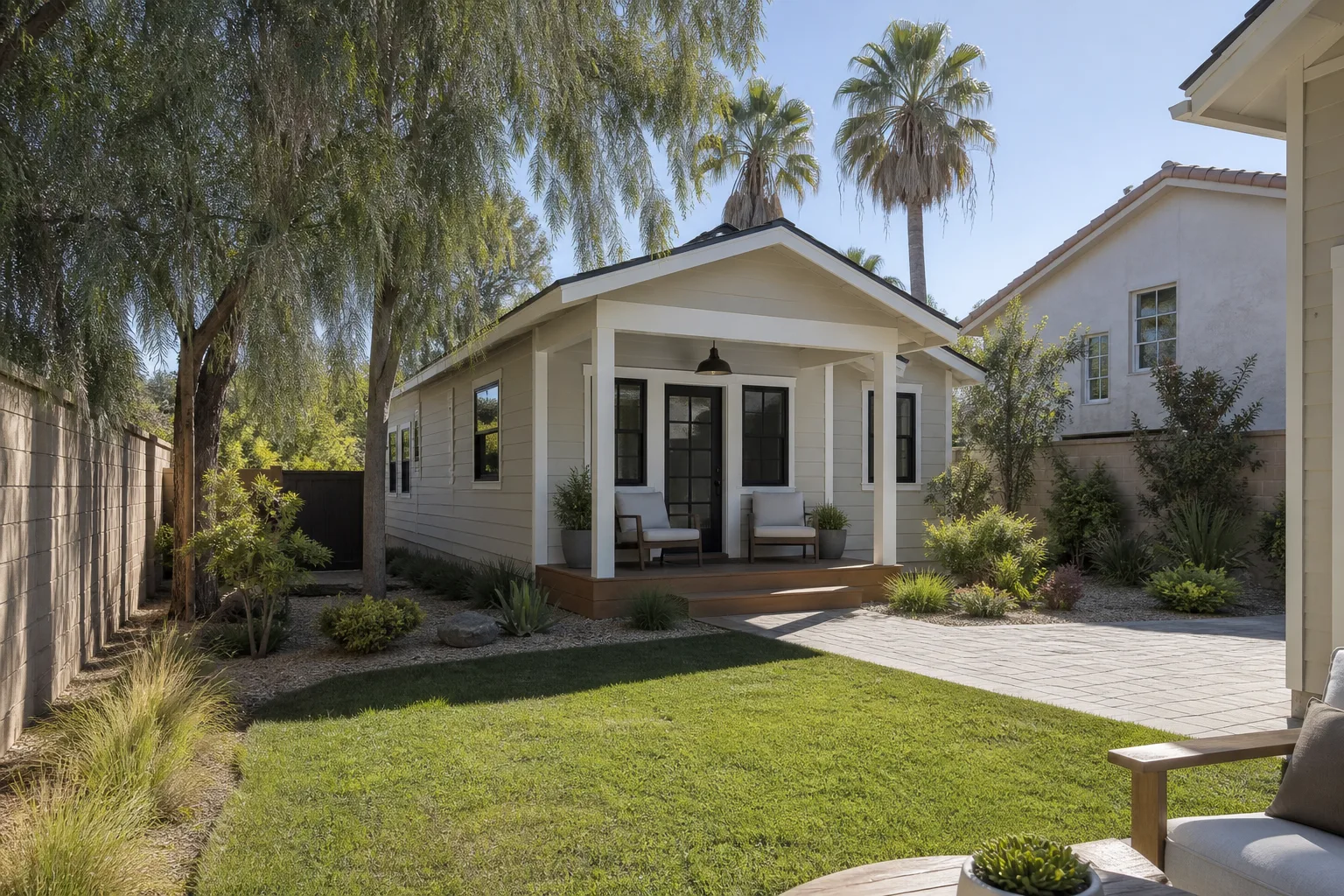
Quikrete home additions and ADU construction in Austin typically runs $45,000 – $130,000 for a stick-built addition and $90,000 – $220,000 for a detached accessory dwelling unit, depending on square footage, site prep, and finish level. Sawyer Remodel Austin installs Quikrete-compatible foundations, slabs, and concrete work as part of full addition and ADU builds, and we carry the concrete products and forming materials on our trucks for most standard pours. The most common call we get starts the same way: a homeowner notices hairline cracks radiating from a corner of the existing slab, or they've been told by a foundation inspector that the soil under their Austin home has shifted enough to require a new footing before any addition can go up. In Bouldin Creek or Allandale, where expansive clay soil moves with every wet-dry cycle, the failure shows up as a sticking door, a crack that widens seasonally, or a slab edge that's started to spall. That's when the question becomes: do we patch it, or do we pour it right and build on top of it?
Key Takeaways:
- Quikrete-compatible addition and ADU work in Austin ranges from $45,000 to $220,000 installed, depending on scope.
- Most slab failures trace back to Austin's expansive clay soil, not the concrete product itself.
- We stock common Quikrete mixes, rebar, and form materials on the truck for standard pours.
- Sawyer Remodel Austin is an independent contractor, not affiliated with Quikrete, but we specify their products daily.
- Written price before work starts, photo updates, and a 365-Day Done Right Promise on every job.
Which Quikrete Models This Applies To
Quikrete doesn't make a single "home addition kit" the way some homeowners assume. What they make are the component products that go into a foundation, slab, or stem wall: Quikrete 5000 High-Strength Concrete Mix for structural slabs and footings, Quikrete Crack-Resistant Concrete Mix for slabs that will take tile or flooring directly, Quikrete Concrete Bonding Adhesive for tying new pours to existing slabs, and Quikrete Fast-Setting Concrete Mix for fence posts, mailbox bases, or small ADU anchor points. The most common mix-up we see in Austin: someone orders Quikrete 4000 PSI standard mix for a footing that needs 5000 PSI because their plans call for a two-story addition. That's a structural spec mismatch, and it matters. Always check the PSI rating stamped on the bag against the PSI listed on your engineering drawings. If you don't have drawings, you need them before any addition permit gets pulled in Austin. On the compatibility front: Quikrete's Crack-Resistant mix is what we recommend for ADU slabs in neighborhoods like Mueller or Crestview, where post-tension slabs are common and the new pour has to play nice with existing grade. OEM Quikrete product versus aftermarket: for concrete, there isn't really an "OEM" in the way there is for a furnace blower motor. What matters is the PSI spec, the aggregate size, and whether the mix includes fibers for crack control. We stock Quikrete 5000 and Crack-Resistant on the truck, plus rebar chairs, expansion joint material, and bonding adhesive. If the job calls for a specialty mix like Quikrete Shotcrete for a steep grade, we order it direct and it's on site within one business day in Austin.
Styles & brands we work with







Signs Your Quikrete Home Additions & ADU Is Failing
If you're planning an addition and already have a slab or foundation in place, here's what tells us the existing concrete is done before we ever put a form board down:
- Diagonal cracks wider than 1/8 inch at slab corners. In Austin clay, this almost always means differential settlement, not a bad pour. The soil under one corner is moving more than the rest, and the concrete is cracking to relieve the stress. Patching the crack without addressing the base is throwing money away.
- Slab edge spalling or flaking. You see this on older slabs where water has wicked up through the concrete, carrying salts that pop the surface. Once spalling starts, the slab's top layer is compromised and a bonded overlay is the only fix that lasts, if the slab is otherwise sound.
- Doors or windows in the existing structure that stick seasonally. A door that sticks in February and frees up in August is your house telling you the slab or foundation is moving with Austin's wet-dry cycle. Any addition tied to that foundation will move the same way unless the new footing is isolated or the soil is addressed.
- Visible moisture or efflorescence on the slab surface. White chalky residue on concrete means water is moving through the slab. That water will eventually find its way into whatever we build on top, whether it's a bedroom, a kitchen, or an ADU living space. Vapor barrier and proper slope are the answers, not just sealing the surface.
- Hollow sounds when you tap the slab with a hammer. A hollow spot is delaminated concrete, separated from the subbase or from itself. It will not hold anchor bolts, tapcons, or even a heavy wall plate without risk of cracking further. That section gets cut out and re-poured.
See the difference
 Before
 After
After Before
 After
After Before
 After
AfterReplacement Cost & What's Included
In Austin, a full home addition with Quikrete foundation work typically lands between $45,000 and $130,000. A detached ADU with slab-on-grade foundation runs $90,000 to $220,000. The spread comes down to square footage, site access, soil conditions, and how much of the existing slab has to be removed and replaced before new work starts. A garage conversion that only needs floor leveling and minor concrete patching can come in at $30,000 to $80,000. What's included in our price: demolition of failed concrete, formwork, rebar or wire mesh, Quikrete mix matched to your engineering spec, pour, finish, and cure time. And a written price before any work starts, so the number you approve is the number on the invoice. No change orders because we forgot to include the rebar. Our 365-Day Done Right Promise covers the concrete and framing work for a full year after the project closes. If it's not done right, we make it right.
Installed Price Ranges in Austin
| Project Type | Installed Range |
|---|---|
| Home Addition (Quikrete foundation) | $45,000 – $130,000 |
| ADU Construction (slab-on-grade) | $90,000 – $220,000 |
| Garage Conversion | $30,000 – $80,000 |
| Concrete Driveway (replacement or new) | $4,500 – $12,000 |
| Paver Patio Installation | $3,500 – $11,000 |
DIY or Call Us?
Pouring a concrete slab for an addition or ADU is not a weekend project. The concrete itself isn't the dangerous part. The danger is what you can't see: the grading, the compaction, the moisture barrier, the rebar spacing, and the cure rate. Get any of those wrong in Austin's clay-heavy soil and you'll be cutting out and re-pouring a $15,000 slab in two years because the base shifted. What you can safely do yourself: measure your existing slab, check for the symptoms we listed above, and write down the PSI spec from your plans before you call anyone. That saves time on the estimate and tells us you know what you're looking at. Anything involving gas lines running under the slab, post-tension cables, or structural footing work: that's a licensed contractor's job, full stop. We're happy to give you a free estimate and a written price. Call (409) 834-4854 and we'll come out, look at the site, and tell you straight what it'll cost and how long it'll take.
FAQs

A properly poured Quikrete slab on compacted, moisture-barriered ground in Austin lasts 40 – 60 years before major structural repair is typically needed. The slab itself is rarely the failure point. Austin's expansive clay and poor drainage are what shorten slab life, which is why we spend more time on base prep than on the concrete itself.
Yes, if the crack is cosmetic and the slab is still level, we can repair it with epoxy injection and a bonded overlay before building on it. If the crack is structural, caused by soil movement, or the slab is out of level by more than a quarter inch over six feet, replacement of that section is the only fix that won't haunt you after the addition is finished. Call (409) 834-4854 for a free assessment.
A standard slab pour for an ADU or addition takes 1 – 2 days for form and pour, then 7 days of cure before framing can start. Full-strength cure in Austin's humidity takes 28 days, but you don't wait 28 days to build, we frame on day 7. Most additions in Austin run 60 – 90 days from permit to final inspection.
We stock Quikrete 5000 High-Strength Mix, Crack-Resistant Mix, Fast-Setting Mix for posts and anchors, plus rebar chairs, expansion joint, and bonding adhesive on our trucks. If your project calls for a specialty Quikrete product like Shotcrete or a specific PSI mix we don't carry, we order it and it's on site within one business day in Austin. You never have to buy materials yourself. Call (409) 834-4854 for an exact quote, estimates are free.
Written by Luca Romano, Owner, Sawyer Remodel Austin at Sawyer Remodel Austin, serving Austin and nearby areas.


