




Free written scope consultation - allowances, timeline, and change-order rules on paper before a single trade is scheduled
Unilock Home Additions & ADU: The Austin Owner’s Guide
A Unilock home addition in Austin typically runs $45,000 to $130,000 installed, depending on square footage, foundation type, and whether you’re tying into existing Unilock paving and wall systems. We keep Unilock-compatible pavers, wall blocks, and coping on hand for the hardscape tie-in, and we can usually have a site assessment done within a few days of your call. The problem most homeowners hit isn’t the addition itself, it’s the transition: the existing Unilock patio or retaining wall suddenly looks like an afterthought, or worse, the grading wasn’t handled and water is now pushing against the new foundation.
That’s the failure point nobody talks about until water shows up in the wrong place. A new addition changes how water moves across your property. Unilock pavers are permeable at the joint, but only if the base was pitched correctly. When the addition changes the slope, or when the new concrete pad butts against old Unilock pavers with no transition, you get ponding, paver heave, and eventually cracks in the new slab edge. We see it all over Austin, from Bouldin Creek to Crestview.
Which Unilock Models This Applies To
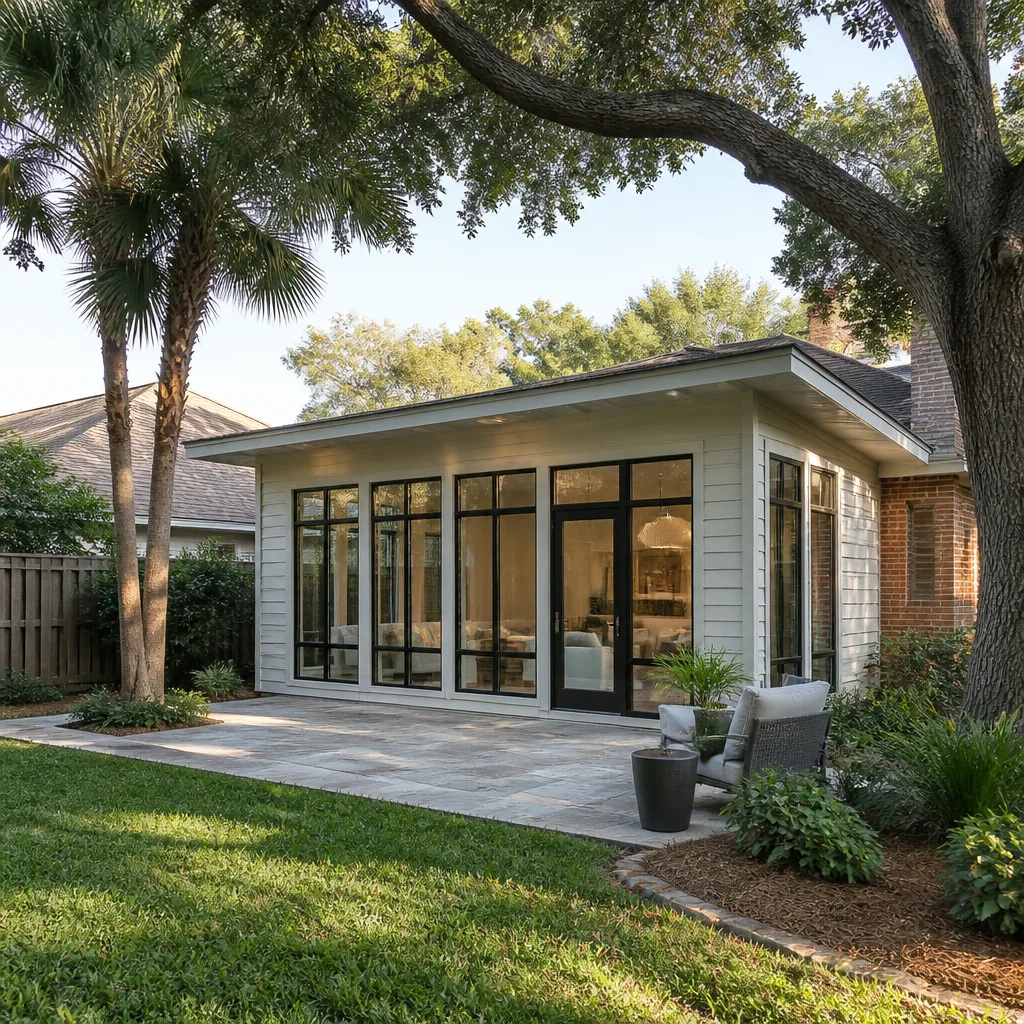
This page covers the parts and compatibility issues that come up when you’re adding square footage or building an ADU that ties into an existing Unilock hardscape. The specific Unilock product lines that matter here are Richcliff (the rectangular paver that looks like cut stone), Brussels Block (the tumbled, older-style paver), U-Cara (the wall panel system), and Lineo Dimensional Stone (the newer flat-stone wall block). If your patio or retaining wall predates 2015, it’s almost certainly Brussels Block or Richcliff; newer homes in East Austin often use Lineo or U-Cara.
Here’s a compatibility gotcha worth knowing: Unilock changes paver dimensions between manufacturing runs, even within the same product name. A Richcliff paver bought in 2018 is not necessarily the same thickness as one bought in 2024. If you’re tying an addition into an old patio, we bring a caliper and measure the existing units before we order anything. Aftermarket equivalents exist and can save real money, but Unilock’s color-blending across multiple pallets is something third-party suppliers rarely match. For additions where the old and new hardscape meet in a visible spot, we strongly recommend OEM Unilock units, even at the premium. For the parts of the addition nobody sees, like underlayment aggregate or edge restraint, quality aftermarket material works fine.
Sawyer Remodel Austin is an independent contractor, not a Unilock dealer or affiliate. That matters because we don’t have a quota to hit on any specific product. If the right answer for your Austin home is an aftermarket equivalent, we’ll tell you that and price it accordingly.
Styles & brands we work with







Signs Your Unilock Home Addition or ADU Is Failing
- Water ponding against the new foundation slab. The old paver base was pitched for the original footprint. Now that the addition is there, water collects at the transition line and slowly eats the sub-base. This is the number one issue on Austin additions, especially after heavy spring rains.
- Paver movement right at the addition’s edge. If the Richcliff or Brussels Block units next to the new wall are tilting or sinking, the edge restraint was likely cut during excavation and never properly reinstalled. Unilock pavers don’t shift on their own; they shift when the perimeter fails.
- Cracks running from the corner of a door or window into the hardscape. This usually means the foundation was poured without a proper expansion joint at the threshold, so the structure is moving against the pavers instead of with them. You’ll see this most often on ADUs built on piers in the blackland prairie soil that runs through much of Austin.
- Retaining wall blocks pushing out after the addition went in. Adding a structure changes the weight load on slopes. An old Lineo wall that held fine before now has more water and more pressure behind it. In Austin’s clay-heavy soil, this shows up fast.
- Faded or mismatched new pavers next to old ones. This isn’t structural but it’s a real complaint. UV exposure in Texas is brutal, and aged Unilock pavers darken and mute. A patch job with fresh OEM units stands out for years unless the installer deliberately blends from multiple pallets.
Replacement Cost & What’s Included
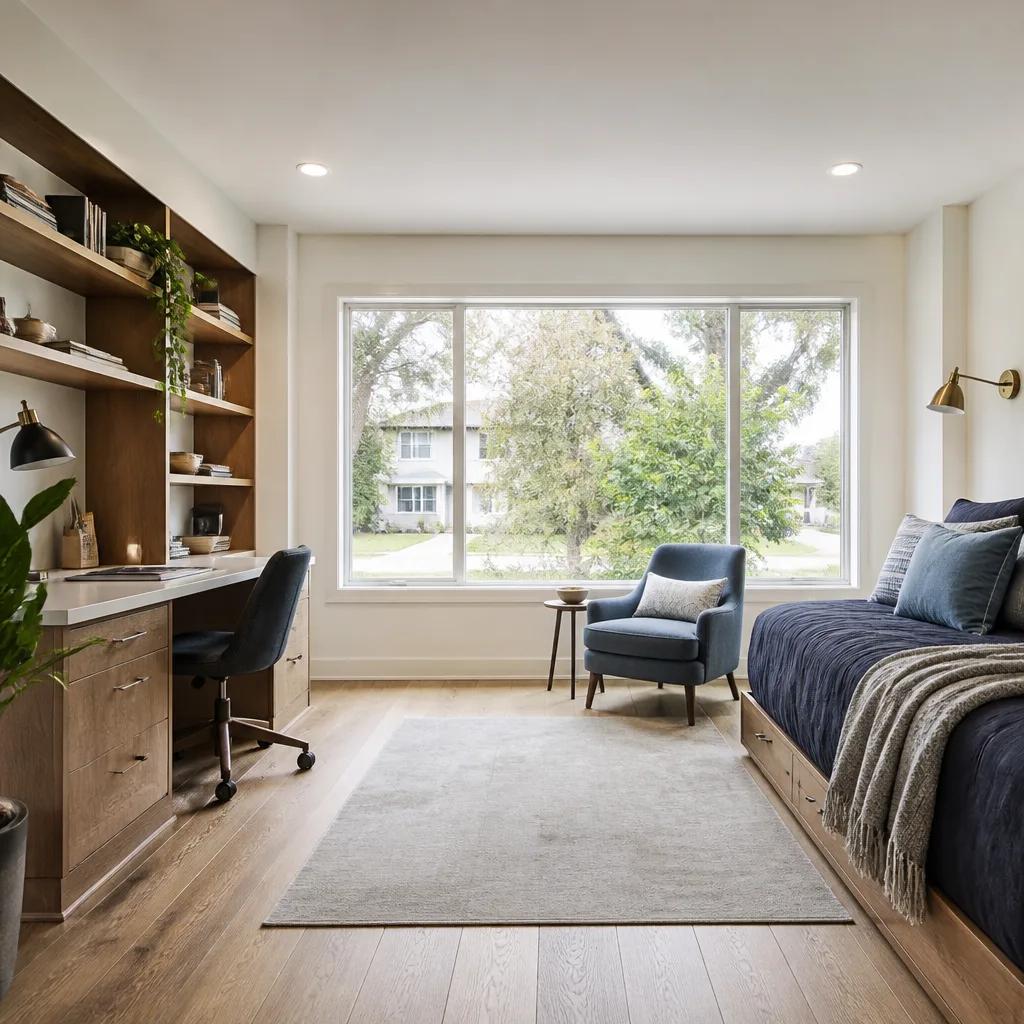
A full home addition in Austin runs $45,000 to $130,000. A detached ADU is a bigger lift: $90,000 to $220,000 in this market, driven mostly by foundation type, utility runs, and whether you’re doing a full kitchen and bath inside. Garage conversions land between $30,000 and $80,000, depending on the existing slab condition and how much plumbing has to be added.
When the scope includes Unilock hardscape work alongside the structure, here’s how the numbers break out. The hardscape portion of a job this size, meaning the paver tie-in, a new patio, or retaining wall work, typically adds $20,000 to $40,000 to the project total. Every quote from Sawyer Remodel Austin includes a written line-item price before any work starts. You’ll see the material cost, the labor, and the disposal fee listed separately. If we find site conditions that change the number, you hear about it in writing before we spend another dollar. The work is covered by our 365-Day Done Right Promise: if something isn’t done right, we make it right, with a free second visit if a repair fails within the year.
DIY or Call Us?
Building a home addition or ADU is not DIY territory, and the hardscape tie-in isn’t either, not if you want it to last. What you can do yourself: measure your existing Unilock pavers (length, width, and thickness), photograph the labels on any leftover pallets in your garage, and mark where water pools after a heavy rain. Those details help us quote faster.
What goes wrong without a pro: excavation around the addition cuts into the paver base, nobody reinstalls edge restraint, and water finds the gap. Then you’re paying to fix both the new slab edge and the hardscape. The person running your project from the Sawyer side in Austin is Luca Romano. He’ll read the site before we price anything, because Measure twice, cut once, then we actually build the thing. Call (409) 834-4854 and we’ll walk the property with you, no charge for the estimate.
See the difference
 Before
 After
After Before
 After
After Before
 After
AfterHow much do Unilock home additions last in Austin’s climate?
A properly built Unilock hardscape in Austin should hold its structural integrity for 25 to 30 years, but the first 15 are the easy years. The climate works against you: intense UV exposure fades the color, clay soil expands and contracts with every drought-to-flood cycle, and hard freezes (we get one or two a decade) pop pavers that have water trapped underneath. The pavers themselves rarely fail; the base does. If the sub-base was compacted correctly and the edge restraint stayed intact, you’re looking at a hardscape that outlasts most roofs in this city.
Can a failing Unilock addition be repaired instead of rebuilt?
Yes, in most cases. Paver movement at the transition line is repairable: we pull the affected section, re-grade the base, install proper edge restraint, and relay the pavers. Retaining wall push-out can often be fixed with drainage pipe, geogrid, or a rebuilt core. What can’t be economically repaired is a foundation crack running through the new slab from a bad expansion joint; that’s a structural conversation. Call (409) 834-4854 and we’ll tell you which category yours falls into before you spend a dime.
How long does the Unilock tie-in work take on an addition?
For the hardscape portion, plan on 3 to 7 working days, depending on how much of the old patio we have to pull and relay and how much new base material goes in. If the project is just the tie-in at the foundation edge, that’s typically a 2-day job. Rain delays are real in Austin in April and May, and we don’t compact a wet base, so we build that buffer into every schedule. You’ll get before and after photos, and a live arrival time so you’re not waiting around.
Do you stock Unilock parts or have to order them?
We keep common Unilock units on hand for Austin jobs: Richcliff, Brussels Block, and Lineo in the colors we see most often because in this market that covers about 80% of tie-in work. Odd colors, U-Cara panels, or specialty coping get ordered from the regional distributor and usually land in 3 to 5 business days. If you have leftover pallets from your original build, even better, the color match is as close as it gets.
Written by Luca Romano, Owner, Sawyer Remodel Austin at Sawyer Remodel Austin, serving Austin and nearby areas.


