



Free written scope consultation - allowances, timeline, and change-order rules on paper before a single trade is scheduled
Styles & brands we work with







See the difference
 Before
 After
After Before
 After
After Before
 After
AfterHow Much Does Kitchen Island Installation Cost in Austin?
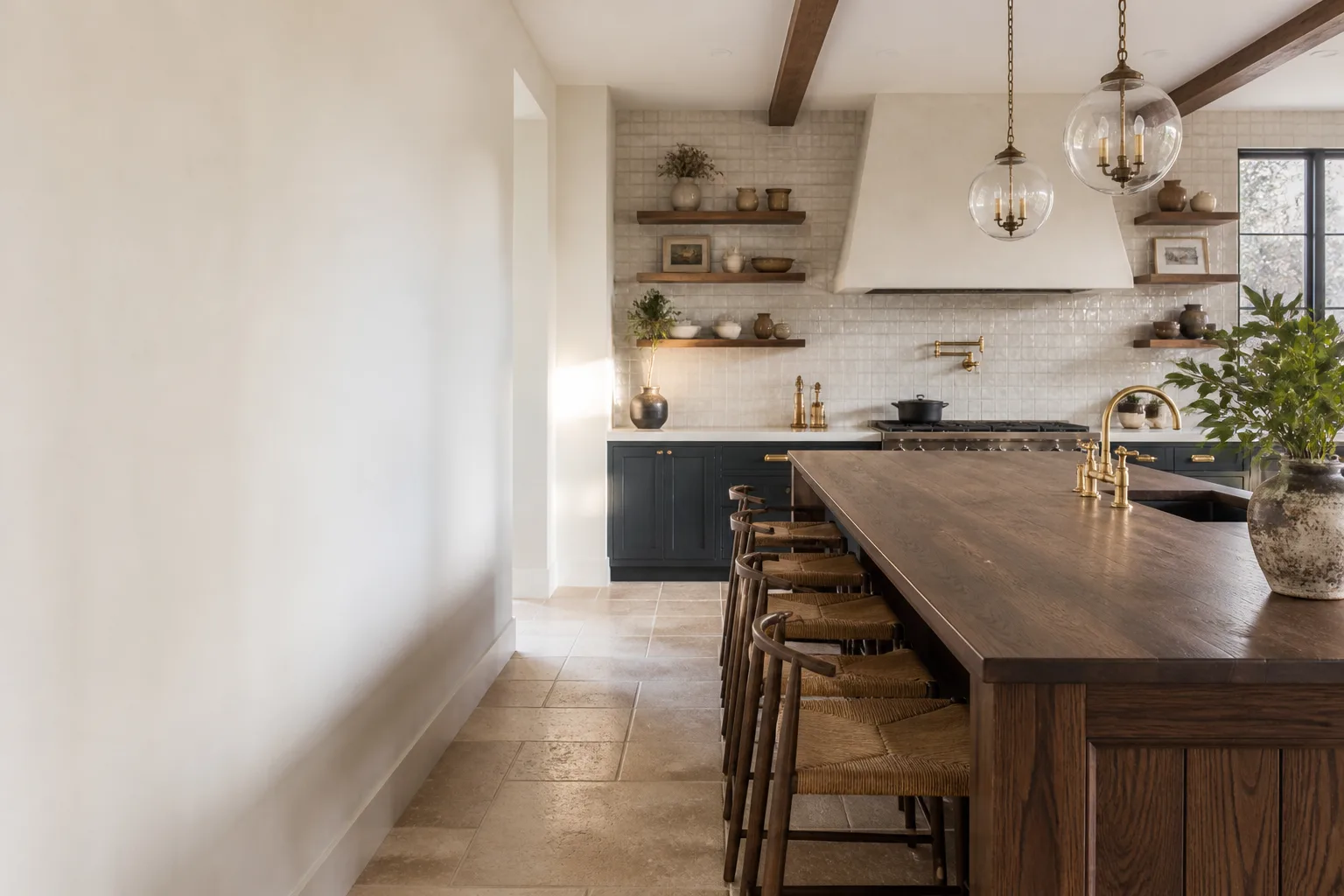
A kitchen island installation in Austin typically runs between $3,000 and $10,000 in 2026. The final number depends on whether you’re adding plumbing, electrical outlets, a cooktop, or custom cabinetry. Most mid-range islands with standard cabinetry and a stone countertop land around $5,500 to $7,500.
Austin homeowners who call us at Sawyer Remodel Austin usually get a written estimate within 48 hours. We put the price in writing before any work starts, so the number you approve is the number you pay.
Kitchen Island Installation Cost Breakdown (2026)
Here’s what a typical kitchen island installation in Austin costs, line by line. These are real ranges from our Austin projects, not national averages skewed by cheaper labor in other states.
| Line Item | Cost Range |
|---|---|
| Base island cabinetry (stock, 4-6 linear feet) | $1,200 – $3,500 |
| Custom or semi-custom cabinetry | $3,000 – $7,000 |
| Countertop (quartz, granite, or butcher block) | $900 – $3,200 |
| Electrical rough-in and outlets | $400 – $1,200 |
| Plumbing rough-in (sink or prep sink) | $600 – $2,000 |
| Appliance hookups (cooktop, beverage fridge) | $300 – $1,000 |
| Delivery, assembly, and installation labor | $600 – $2,500 |
| Painting, trim, and finish work | $200 – $800 |
What moves the price up or down:
- Plumbing is the biggest swing factor. Adding a prep sink means running supply lines and drain pipe through the slab or crawl space. Austin homes on post-tension slabs can be especially tricky, and you’ll often need a plumber in addition to the general contractor.
- Electrical needs vary by neighborhood age. Older homes in Hyde Park or Bouldin Creek often have panels that are nearly full, so adding a dedicated circuit for an island outlet can mean a subpanel upgrade. Newer builds in Mueller or East Austin rarely have that issue.
- Stone choice matters more than you’d think. Cambria and Caesarstone quartz slabs cost more than basic granite, but they’re more consistent in color and finish. We install both, and we’ll show you samples with manufacturer-backed warranties.
- Island size drives the square footage. A 3-foot island is a different project than an 8-foot island with seating for four. Every extra linear foot adds cabinetry, countertop, and labor.
What Affects Kitchen Island Installation Pricing in Austin
Austin has some specific cost drivers that don’t show up in national pricing guides. Here’s what we see on job sites across the city:
- Foundation type. Most Austin homes built after 1990 sit on post-tension concrete slabs. Cutting into a post-tension slab to run plumbing is a specialized job that needs a structural engineer’s sign-off in some cases. Pier-and-beam homes in Crestview or Allandale are easier and cheaper to work under.
- Permit requirements. The City of Austin requires an electrical permit if you’re adding outlets, and a plumbing permit if you’re adding a sink. Permit fees typically run $150 to $600 depending on scope. We handle the permit paperwork as part of the job.
- Countertop fabrication lead times. Local stone fabricators in Austin are busy in 2026. Quartz and granite slabs usually need 2 to 4 weeks of lead time after templating. Butcher block and laminate are faster options if you don’t want to wait.
- Appliance integration. A cooktop or downdraft vent changes the electrical load and sometimes requires a gas line. A simple prep island with just outlets is the most affordable path.
- Seating overhangs. If you want bar stools, you need a 12 to 15 inch countertop overhang, which usually means steel support brackets or corbels. That’s a small cost add, but it’s an easy one to forget during planning.
- Cabinetry grade. Stock cabinets from KraftMaid land on the lower end. Custom-built cabinetry from a local Austin wood shop can push the project past $8,000 just for the box. We’ll give you both options with clear pricing so you can decide with your budget in front of you.

Is a Full Kitchen Remodel a Better Value?
Sometimes an island installation is part of a bigger kitchen remodel, and sometimes it’s a standalone upgrade. Here’s the honest comparison for Austin homeowners:
- Kitchen island only: $3,000 – $10,000. Makes sense if your existing kitchen layout works and you just need more prep space or storage.
- Full kitchen remodel: $14,000 – $45,000. Worth it if your cabinets are dated, your layout fights you, or you’re already planning new countertops and a backsplash anyway.
One thing we tell every client: if you’re replacing the countertops within the next three years, do it at the same time as the island. You’ll pay for countertop fabrication once instead of twice. Our home page has more on how we scope projects like this.
Kitchen Island Installation Cost by Scope in Austin
To make this concrete, here are three real scenarios we’ve priced for Austin homeowners recently:
- Basic prep island, 4 feet wide, no plumbing. Stock cabinetry, butcher block top, two outlets on an existing circuit. $3,200 – $4,500.
- Mid-range island, 6 feet wide, with prep sink. Semi-custom cabinetry, quartz top, plumbing rough-in, three outlets on a new dedicated circuit. $6,000 – $8,500.
- High-end island, 8 feet wide, with cooktop and seating. Custom cabinetry, Cambria quartz, gas line for the cooktop, downdraft vent, electrical and plumbing, seating overhang with steel supports. $9,500 – $12,000.
These are Austin market numbers from 2026, not national estimates. We work on Kitchen Island Installation in Austin projects across the metro every month, and these ranges reflect what our clients actually pay.
How to Save on Kitchen Island Installation
You don’t have to cut corners to keep costs down. Here’s what actually works:
- Skip the plumbing. A prep sink adds $1,200 to $2,500 when you factor in the plumber, the permit, and the slab work. If your main sink is within arm’s reach, this is the single biggest cost you can avoid.
- Choose stock cabinetry. KraftMaid stock cabinets are well-built and come in enough finishes to match most kitchens. You trade some size flexibility for a meaningful price drop.
- Go with butcher block or laminate. Both are dramatically cheaper than stone, and butcher block has held up well in the Austin homes where we’ve installed it. It does need oiling every six months or so, which matters in our dry summers.
- Reuse an existing circuit. If your kitchen already has an underused circuit nearby, we can often tap into it instead of running a new line from the panel. Our electricians will verify the load safely before recommending this.
- Plan around countertop lead times. Rush fabrication fees can add 15 to 20 percent to the stone cost. If you can wait three weeks for the slab, you’ll pay less.
The best way to see your actual number is to call us at (409) 834-4854 for a free estimate. We’ll come out, take measurements, and hand you a written price. No pressure, no vague ranges, no surprises at the invoice.
Kitchen Island Installation Timeline in Austin
Most island installations take 3 to 7 days on site, spread across a few visits. Here’s the typical sequence:
- Day 1: Demolition (if replacing an existing island), rough-in for electrical and plumbing, inspection scheduling.
- Days 2-3: City of Austin electrical and plumbing inspections pass.
- Days 3-5: Cabinetry assembly and installation, countertop templating.
- Days 5-7: Countertop fabrication and install, appliance hookups, finish trim, and final walkthrough.
With Sawyer Remodel Austin, you get a live arrival time before every visit and photo updates after each day’s work. That’s the Relay Standard: you know who’s coming, when they’ll arrive, and what got done.
Do Kitchen Islands Add Value to Austin Homes?
In Austin’s 2026 real estate market, a well-built kitchen island is one of the better returns among mid-range kitchen upgrades. Buyers in Round Rock, Cedar Park, and central Austin consistently rank kitchen storage and prep space near the top of their must-have lists.
That said, the return depends on execution. A poorly placed island that blocks the work triangle between the sink, stove, and refrigerator can hurt a kitchen’s flow. A well-planned island with seating usually helps both daily use and resale appeal.
We’ll give you an honest read during the estimate. If the island won’t fit your kitchen’s dimensions properly, we’ll tell you before you spend a dollar. The Kitchen Island Installation in Austin page walks through the process step by step.
Permits and Code Requirements in Austin
The City of Austin requires permits for most island installations that involve electrical or plumbing work. Here’s what you need to know:
- Electrical permit: Required for new outlets, dedicated circuits, or any wiring change inside the island base. Licensed electrician required.
- Plumbing permit: Required for a prep sink, pot filler, or any water line addition. Licensed plumber required.
- HOA approval: Some Austin HOAs, especially in communities like Steiner Ranch and Avery Ranch, require architectural review before kitchen work that changes plumbing. We’ll help with the paperwork.
Sawyer Remodel Austin handles permits on every project. We’re state-licensed and insured, and our technicians are background-checked and uniformed. You’ll never wonder who’s walking into your kitchen.
Common Kitchen Island Mistakes We See in Austin
Before you sign a contract, read these. They’re the expensive lessons we’ve seen other homeowners learn:
- Too much overhang without support. A 15-inch overhang with no steel brackets will eventually sag or crack. We always add support, even on small islands. The fix later costs more than the brackets would have.
- Ignoring the work triangle. National Kitchen and Bath Association guidelines say the sum of the distances between sink, cooktop, and refrigerator should be between 12 and 26 feet. An oversized island can make that math worse, not better.
- Forgetting about ventilation. If you’re adding a cooktop to the island, you need a downdraft vent or a hood. A ventless recirculating system won’t pass Austin code in most kitchens with gas appliances.
- Skipping the electrical plan. Islands need clearance from the countertop edge to the outlet location, and Austin code has specific spacing rules. An electrician who doesn’t do kitchen work regularly can miss these.
- Buying appliances after the cabinetry is ordered. The cabinet openings need the exact appliance dimensions. Order the appliance first, or at least pick the model, and we’ll build around it.
Why Austin Homeowners Choose Sawyer Remodel Austin for Island Work
Luca Romano started Sawyer Remodel Austin as part of the Relay Home Co. family in 2005. Nearly two decades later, the process is the same one we’ve always used: a written price before any work begins, background-checked technicians on the job, and a live person answering the phone when you call. Twenty-four hours a day, seven days a week.
Every project carries the 365-Day Done Right Promise. If something isn’t right within a year of project close, we come back and fix it. In writing, on every job, no arguing. That’s the guarantee, and it applies to kitchen islands just like it applies to full kitchen remodels that cost ten times as much.
We also answer the phone. Call (409) 834-4854 right now and a person picks up. Not a voicemail tree, not a callback queue. That matters when you’re mid-remodel and need a question answered.
FAQs – Kitchen Island Installation Cost
How much does a kitchen island cost in Austin in 2026?
A kitchen island in Austin costs $3,000 to $10,000 for a complete installation in 2026. Most fall between $5,500 and $7,500 for a mid-range island with quartz or granite and standard cabinetry. Custom islands with plumbing, appliances, and seating can exceed $10,000. Call (409) 834-4854 for an exact quote on your space, free of charge.
Is it cheaper to buy a pre-made island or build one?
A pre-made or stock island typically costs $3,000 to $5,000 installed, while a custom-built island runs $6,000 to $10,000 or more. Pre-made islands save you the cabinetry fabrication cost, but they rarely fit an awkward Austin kitchen layout as well as a built-to-fit island. We’ll price both options so you can compare the actual numbers.
Does a kitchen island need a permit in Austin?
Yes, most kitchen island installations in Austin need an electrical permit, and any island with a sink needs a plumbing permit too. Permit fees typically run $150 to $600 per permit. Sawyer Remodel Austin handles all permitting as part of the project scope.
How long does kitchen island installation take?
Most kitchen island installations take 3 to 7 days on site, with countertop fabrication adding 2 to 4 weeks of lead time in between. Outlets and basic cabinetry can be done in 3 days. Plumbing, cooktop integration, and custom stone push toward the 7-day end.
Can you install a kitchen island in a small Austin kitchen?
It depends on the clearances. You need at least 36 inches of walkway around the island on all sides, and 42 inches if the island has seating or is in a high-traffic path between the sink and refrigerator. Many older Austin kitchens in Hyde Park or Travis Heights fall short of that. We’ll measure during your free estimate and tell you straight if it works.
Written by Luca Romano, Owner at Sawyer Remodel Austin, serving Austin since 2005. Pricing reflects the Austin market as of 2026. Sawyer Remodel Austin offers free estimates – call (409) 834-4854.
Get Your Free Kitchen Island Estimate in Austin
You shouldn’t have to guess whether a kitchen island fits your budget or your floorplan. Call Sawyer Remodel Austin at (409) 834-4854 and we’ll send a background-checked technician to your home, take measurements, and hand you a written price before any work starts. You’ll know exactly what it costs, who’s doing the work, and when they’ll arrive. That’s the Relay Standard, and it’s how we’ve run every project since 2005.
What Our Customers Say
"Straight talk and simple communication. Every question got an answer by text within the hour."
- Cherie A."Crew cleaned up each day. Swept and wiped down the work area every evening, which I did not expect."
- Joy B."Home renovation with a new layout. Permits and inspections were all tracked online."
- Nolan R.